Saturday, February 12, 2011

Despos

Despos04

In the world of tailored clothing, there are houses that are, in my opinion, seriously overhyped, and others who deserve a lot more attention than they get. Chris Despos falls into the latter category.

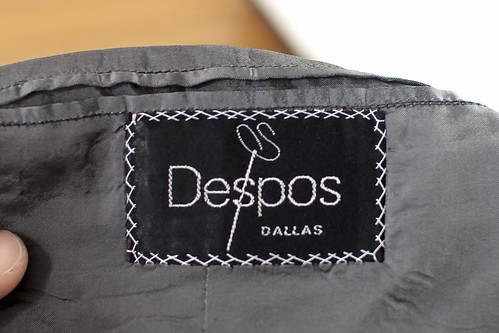
Based now in Chicago, Chris once operated out of Dallas, a city he frequently travels to, in addition to others, so if you are looking for one of the country's (perhaps one of the world's) top tailors outside of the Manhattan area, you can find him in his Oak Street studio.

Many thanks to Chris for donating this suit to science.


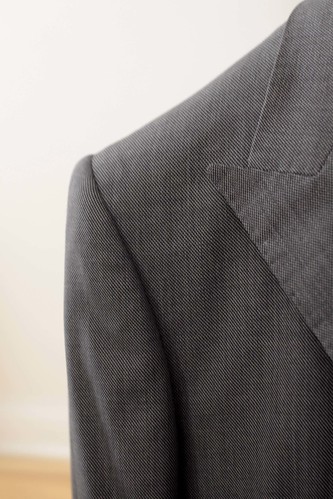
One of the first things that sets my bells ringing is this shoulder.
Despos06

Though currently out of favor but perhaps enjoying a return of sorts, one of the reason that this type of pagoda-shaped shoulder is not so commonly seen is that it represents the pinnacle in terms of difficulty of execution. In other words, it may look odd to many people because they are not used to seeing it because so few can do it right. This kind of shoulder goes beyond just aesthetics- it is actually made to conform more naturally to the actual shape and forward pitch of the human shoulder, and there is a great 3-dimensionality to it. In movie terms, this shoulder is the Avatar to so many Creatures From The Blue Lagoon. You'll be able to see what I mean a bit later in the post.

This suit was made back in 1992 but as we saw in a previous post, has held up really well despite its being made in a super 150s cloth. Chris will be annoyed with me when he sees that the coat has been sitting in a heap since my last post and is thus in need of a pressing, but another annoyed reader commented that they wanted to see more of the garments than just the guts.

Despos01

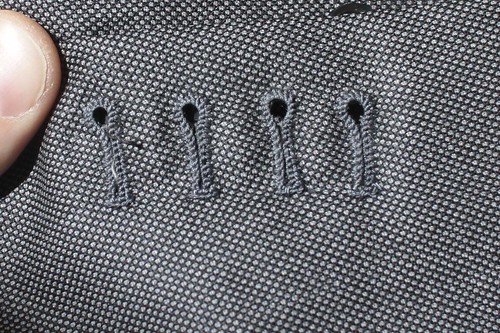
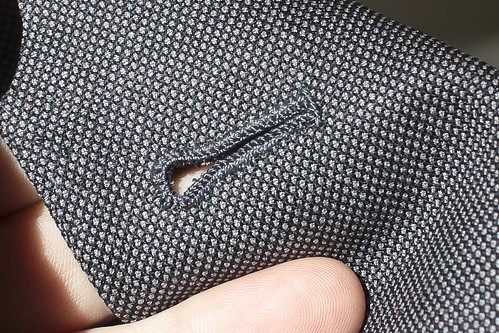
Some buttonhole porn, for those who are into that. These buttonholes are gimped with a single strand of buttonhole twist, instead of the type of gimp I use, so readers who are experimenting with buttonholes and don't have access to the Agreman gimp, here is proof that you can get perfectly good results without it.
Despos02

Despos03

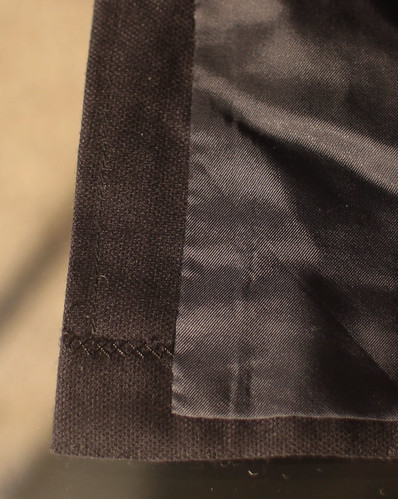
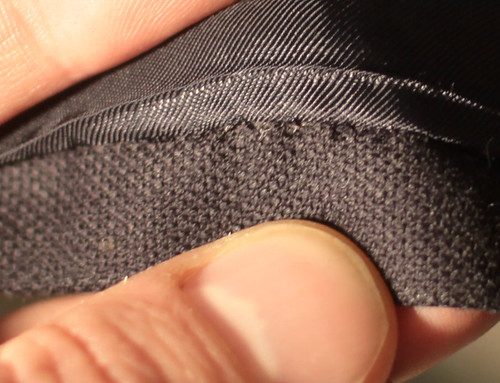
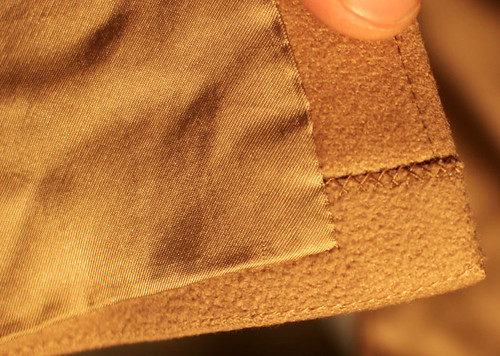
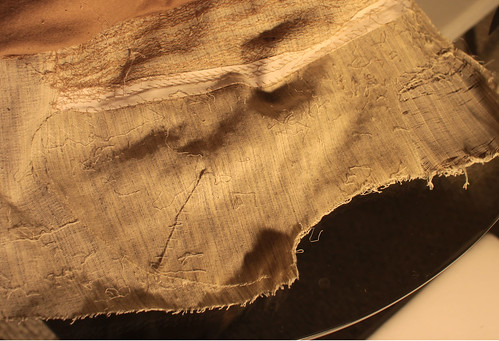
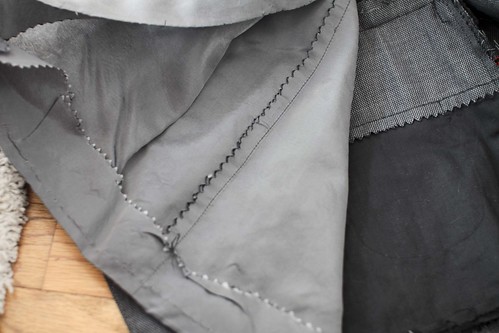
Here's something we don't see all that often anymore; the outlets and cut edges have all been pinked (cut in a zig-zag edge). This prevent the edges from fraying, especially the lining which can get really messy, and may also help to prevent seam impressions.
Despos05


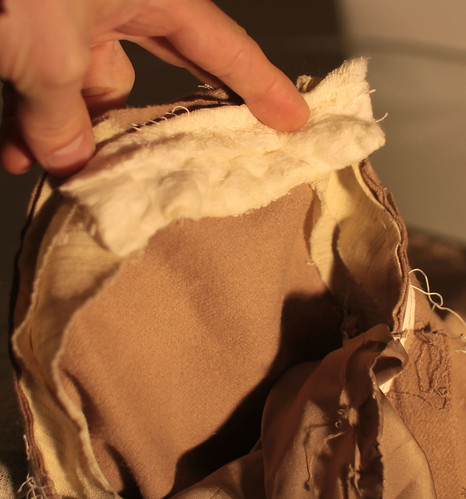
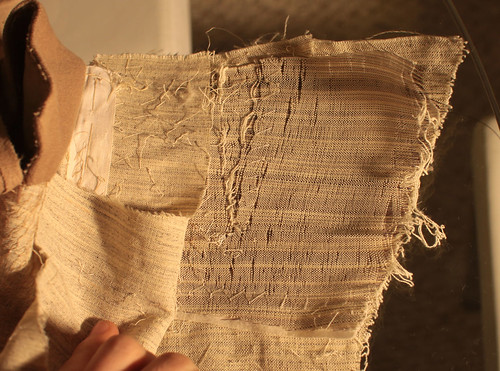
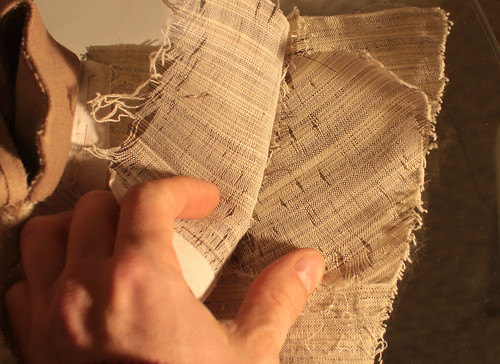
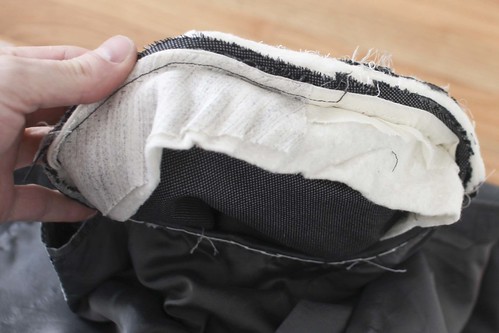
The sleeve head wadding is of the Kotex type, but this has not disintegrated at all. In addition, a single, bias-cut piece of canvas reinforces the front of the sleeve.
Despos07

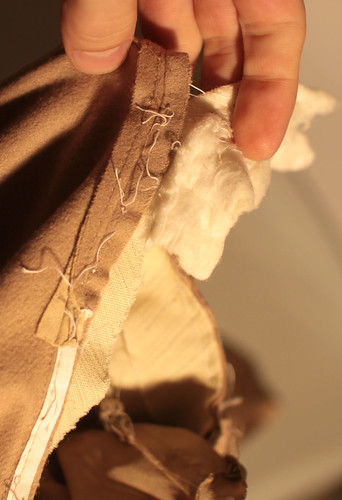
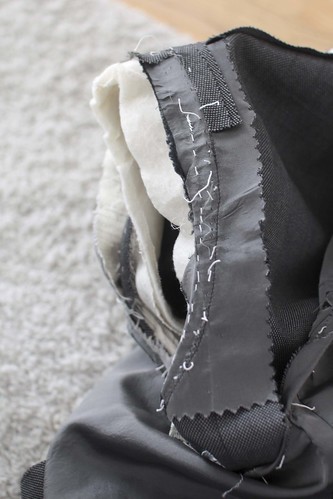
The back of the scye has been stayed with a piece of lining which has been backstitched by hand.
Despos08

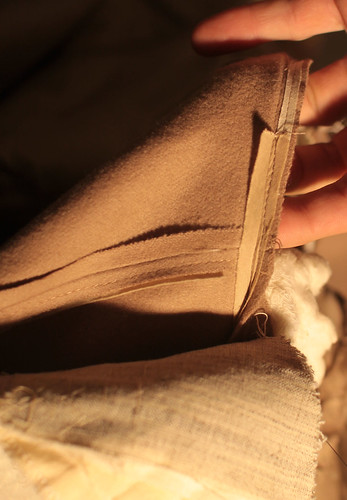
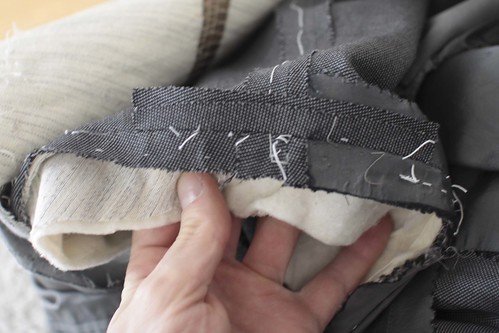
An extra strip of self cloth has been inserted at the cap of the sleeve for smoother pressing.
Despos09

Though it doesn't show in photography, it is worth noting that the sleeves (which are very large, thank you) have been sewn into the (very small) armhole BY MACHINE. The shoulder seam has likewise been sewn BY MACHINE. I don't think that these two steps need to be done by hand, and here is an indication that neither does Despos (nor does Henry Poole, for that matter). His opinion on the matter may since have changed and if it has, I am sure he will share it with us.

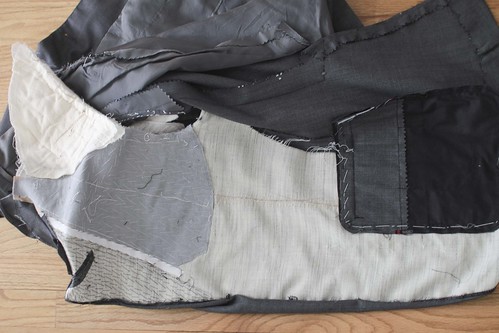
A full view of the coat front shows that his chest piece is of a moderate size, and has been worked up by hand.
Despos10

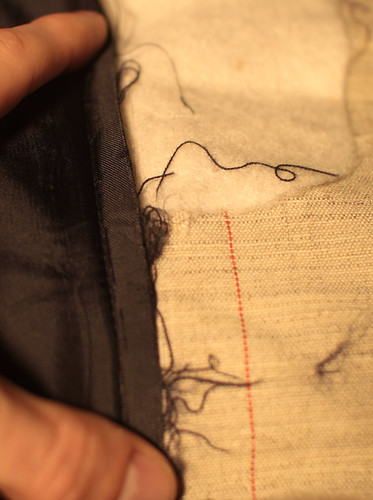
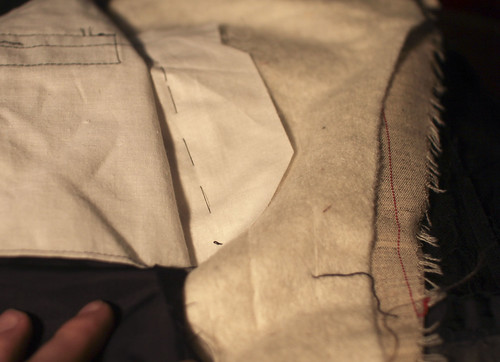
A closer look shows some of the cuts required to shape the shoulder.

Despos11

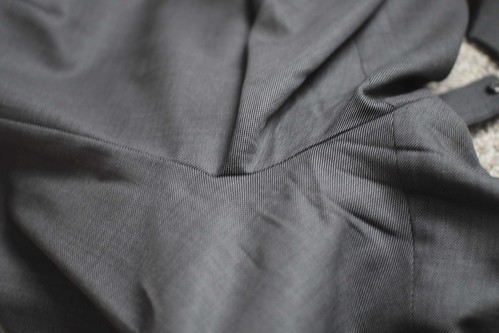
And now for a better look at what I mean about this shoulder shaping.

The pocket that has been created for the shoulder bone is very obvious here. This room is very important to the comfort of the garment- garments whose weight sits on the shoulder point are uncomfortable and don't move as well with the wearer. For this reason, shoulder seams which angle backward (and thus make it more difficult to get this forward pitch of the shoulder) are counter-productive, in my opinion.
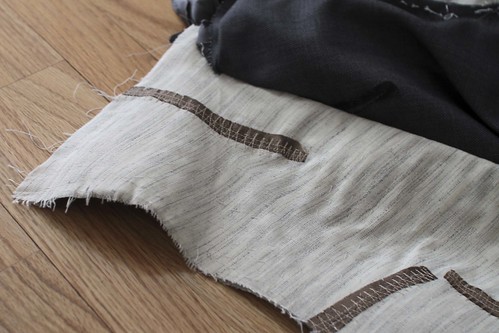
Despos12

Even after 20 years, this shoulder has maintained its shape.

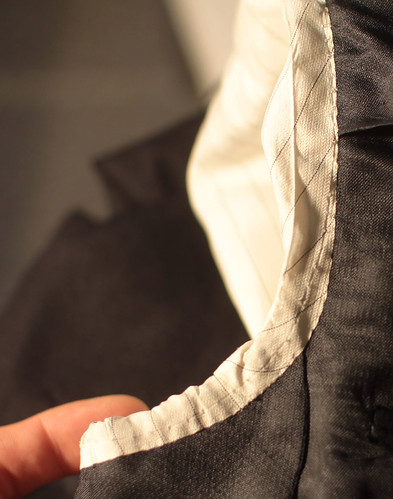
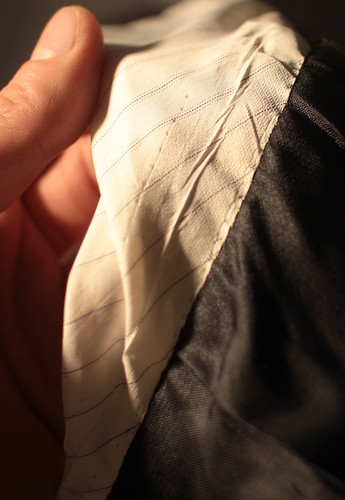
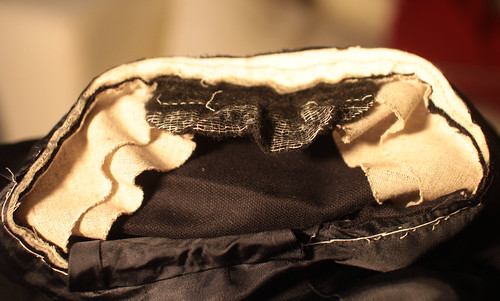
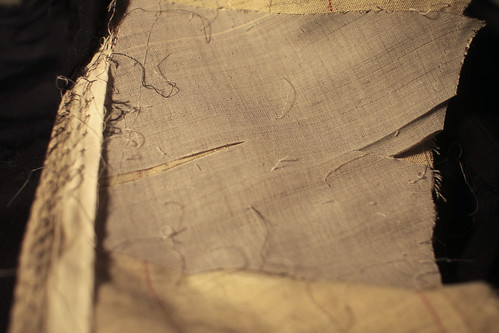
Inside the chest we see the various cuts in the haircloth which build shape, and a strip of beige silesia covering the roll portion to prevent the hair sticking through.
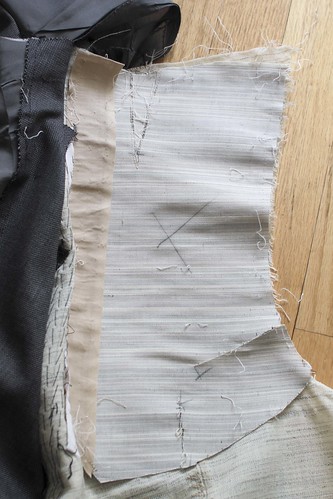
Despos13

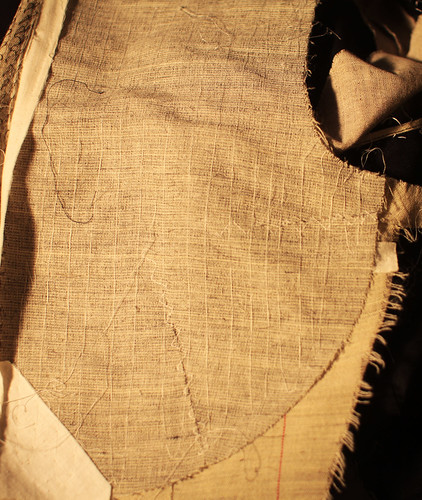
A bias-cut shoulder piece is found, as expected, but somewhat unexpected is the hairline; I am more accustomed to seeing it running up toward the outside of the shoulder, but whatever works...
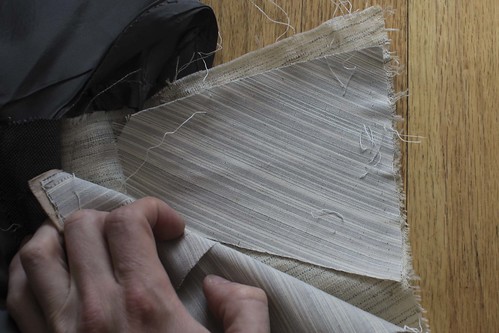
Despos14

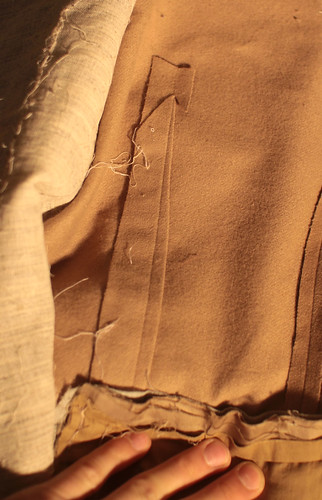
A piece of weft-insertion fusible is used to stabilize the bias grain of the peak lapel.
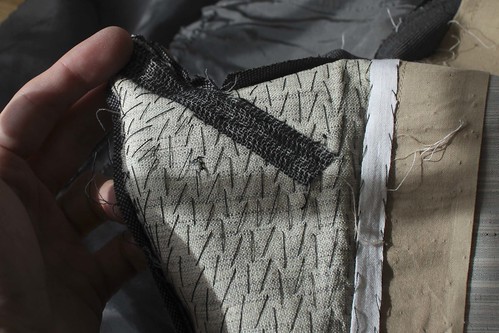
Despos15


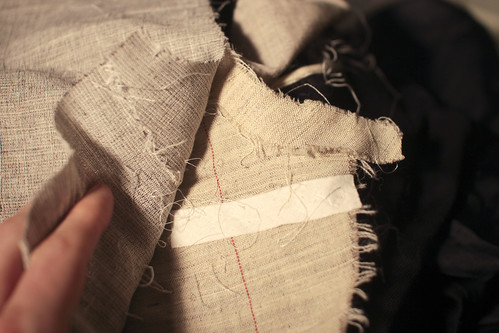
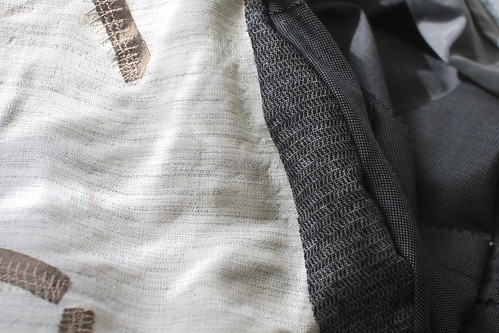
The lapel itself feels a little meatier than I expected so I rip some of the padstitching to have a look underneath. Sure enough, more weft-insertion under the lapel to give more volume to the roll.
Despos16

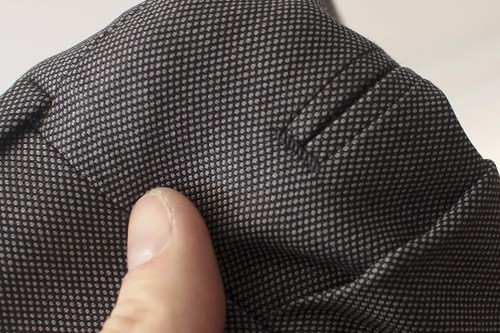
I won't dwell too long on the pants, other than to say their execution is some of the neatest I've seen from the many examples of bespoke work. A few details of note, though, are the buttonhole-stitch bartacks at the end of the pockets,
Despos17

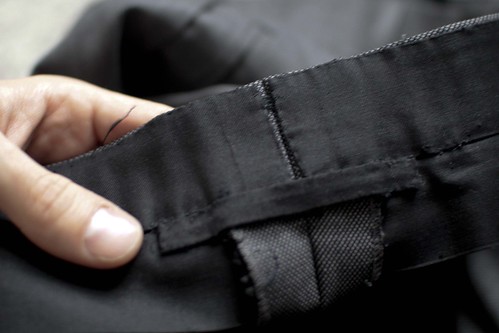
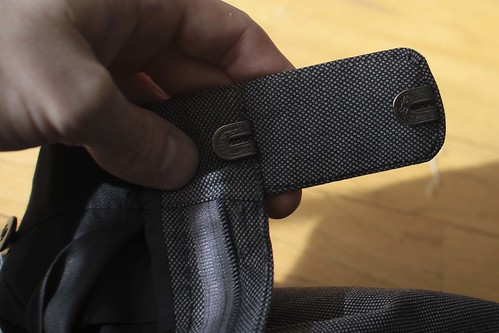
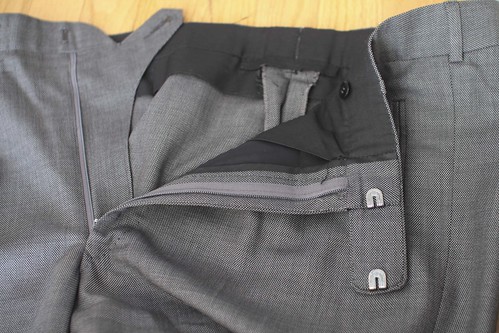
Waistband extensions are more commonly square, as they are much easier to finish than the rounded type, as this one which requires much more work and precision.
Despos18

Despos19


My general impression is that this garment is neater than the majority of examples I have seen from Saville Row houses, and in many instances, more care has been given in its execution. More work went into this garment than the Caraceni that we saw, and the house is legendary. So while the name may not carry the same appeal or cachet than some of the other, more famous houses, the level of workmanship takes a backseat to none of them.

EDIT- disambiguation. There are a number of different results when googling Despos, so to be clear, this is Chris Despos, who is located at 34 East Oak Street, Chicago, Illinois- contact me for the phone number or email address if you need it.

StumbleUpon.com

Sunday, February 6, 2011

Sartorial Mythbusting

MythBusted

The next suit to be dissected is an old bespoke number; made back in 1992, it has clearly been worn. Hard.

There is evidence of the waist having been let out

Waist

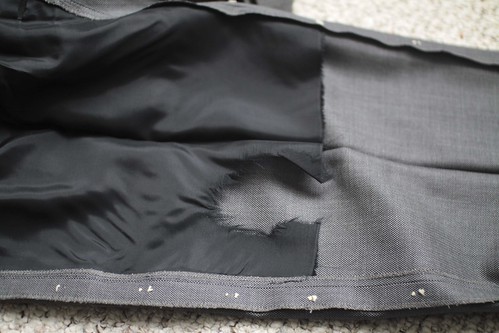
but more telling is this- the owner wore right through the knee lining.

Knees

If I look at the areas of the garment which show the most stress, namely the hem of the trouser (including the inside), the sleeve hem and the seat area, this will give me an idea of how well this particular cloth performed.

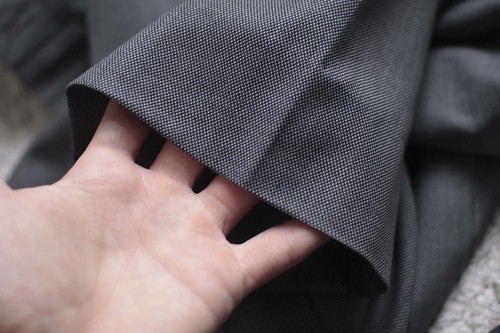
THe hem of the trouser is in almost perfect condition

Hem2

even on the inside

Hem inside

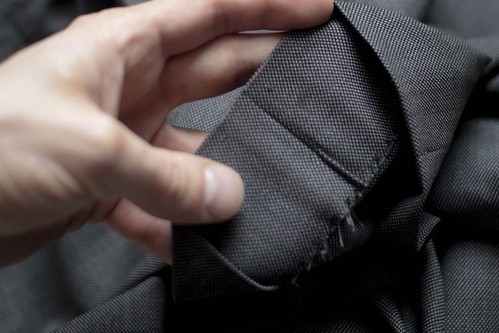
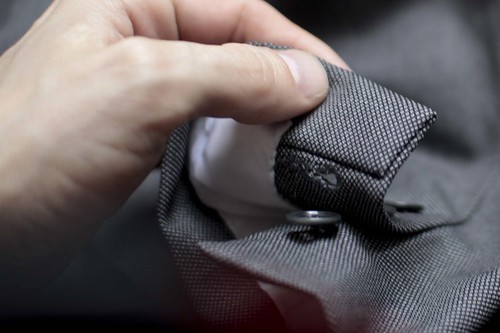
The sleeve hem shows almost no signs of wear

Cuff

and neither does the seat of the trouser.

Seat

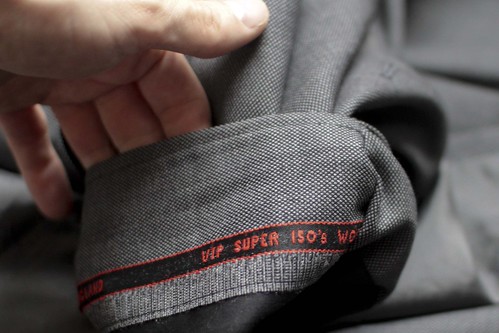
It is quite safe to assume that this is a sturdy, English cloth. But what is surprising about this particular cloth is how fine it is.

Supers


That's right, Super 150s.

One of the common myths among the iGentry is that cloths of high super-numbers (which is an indication of how fine the fibers that were used to weave the cloth are, measured in microns) are too fragile and won't hold up to wear. While some cloths (notably Italian cloth) are made up with the intent of being very fine, soft and lightweight, and thus are more fragile, it is not necessarily true that all cloths bearing high super-numbers will be fragile. This garment being a fine example (in every respect).

So when evaluating the merits of a particular cloth, please do not fall into the ill-informed trap of dismissing a cloth merely because it is made up from super-fine yarns and must, therefore, be too fragile; let your tailor, who knows how various types of cloth handle and perform, guide you instead.

StumbleUpon.com

Saturday, January 29, 2011

Chester Barrie

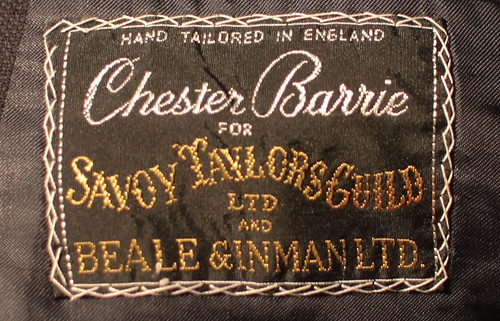
As promised, a vintage Chester Barrie coat courtesy of RSS. Thank you.

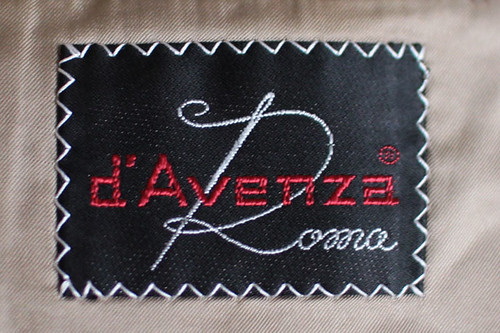
Label

In the previous dissection we looked at a garment made in Italy by D'Avenza, a shop that was set up by Chester Barrie and thus has certain similarities in make. They are not the same age so some of the differences might be attributed to changes in production methods, but it is interesting (to me) nonetheless.

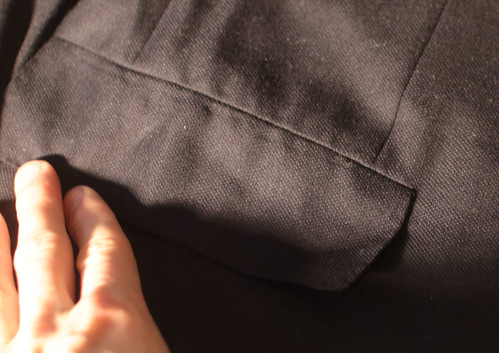
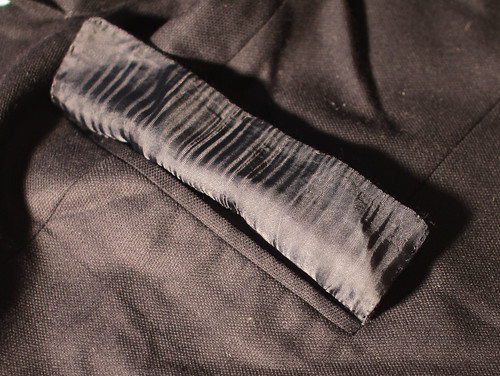
Right off the bat, the un-jetted pocket flap which, to date, we have seen only on Oxxford, D'Avenza, and now CB, though a reader pointed out that their father's suits from Hart Schaffner Marx were also done like this, though they date from a period in which the buttonholes were also done by hand, which is going back a fair bit.

Pocket flap

Pocket welt

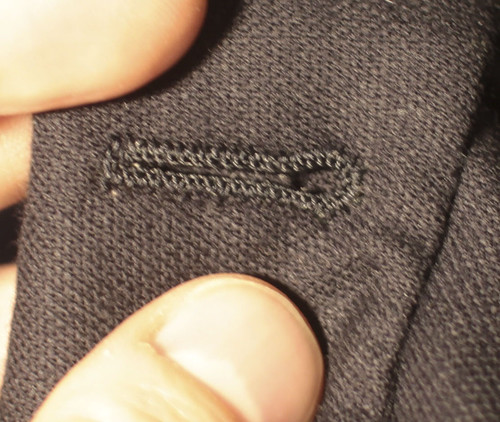
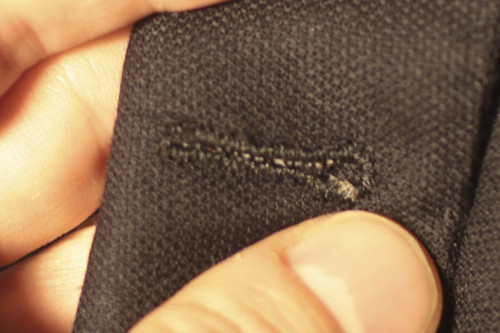
Another similarity between the two shops is that the top buttonhole (the one which is meant to be buttoned on a 2-button coat) has been worked, by hand, on both sides, while the lower one has been done only on the right side, which is the usual practice. Here is the back of the upper buttonhole-

BH back top

And the back of the lower one

BH back bottom

Really need to get proper lighting and a macro lens.

Normally I love cutting open these garments to have a look at the internal workings, but for the first time, I was really hesitant, because the finishing work on this garment is the absolute best I have ever seen. Ever. While the D'Avenza coat's vent and hem had been finished with a felling machine, the lining of this coat has been entirely finished by hand, and the stitching is invisible. Normally little pricks of silk thread can be seen along the edge of the lining, which is the easiest way of spotting whether the lining has been done by hand or by lockstitch machine, but the work is so fine that no stitches are visible along the lining edge

Vent finishing

The hem has been done by hand as well

Hem felling

The armhole is equally neat, though these photos really don't do it justice.

AH1

AH2

It really pained me to cut apart such fine handwork, but it had to be done.

I doesn't show up in photos, but the undercollar has been set by hand, and the top collar was hand-drawn as well.

The hem and vents have been taped and felled in the same was as the D'Avenza coat, but the facing and inside breast pocket have been felled to the canvas by hand rather than blindstitch machine which is more typical. Even Kiton, who claim to do everything by hand, do this step by machine.

Facing felling

Pocket felling39

The sleeve head wadding is made with two pieces of bias-cut canvas, front and back, which have been folded over to reverse the direction of the hairline, and there is a piece of needle-punch felt in the top. Of all the types of felt made for sleeve wadding, I feel that this is the best since it is stable and won't disintegrate like the cotton kotex wadding, and the scrim (the white threads running through the back of it) make this far lighter and softer than the foam-backed needle-punch which is cheaper and thus more commonly found.

Sleeve wadding

The chest felt is fairly meaty, and we can see that the lapel has been padded with a manually-operated machine, not the automated type, which would produce neat, even rows of stitching. The coat front has been pad-stitched using the jump-baste machine, which is my preferred method, instead of a zig-zag or blindstitch machine.

Chest felt

We can see that the armhole was taped before joining the forepart and the side body; it's now more common to join those two pieces and then tape the armhole in one go.

Armhole taping

Rather than having haircloth all the way down the chest, the softer and less-expensive wrapped hair canvas has been used. Note the additional cut is the side of the chest which adds a bit more shape.

Chest

A small strip of canvas has been added to the scye to stabilize it.
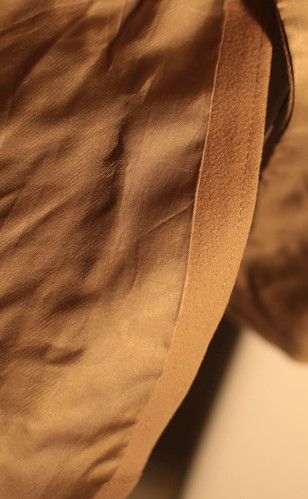
Chest cuts

A piece of rather nice haircloth in the shoulder has cuts on either side to help build in the natural, forward-pitch of the shoulder and a bit of a concave line.

Haircloth

This is certainly one of the best ready-made garments I have seen to date, particularly in the bang-for-your-buck equation. While Oxxford does far more by hand, a lot of those steps, in my opinion, add no value and you are paying a lot of extra money for something which could be done, with the same or better results, by machine. It's just a shame that the quality level today, while still high, is not quite to this standard anymore.

I'm almost tempted to put this coat back together again.

Almost.

StumbleUpon.com

Canvas quality

Canvas twist

A brief heads-up for the tailors out there.

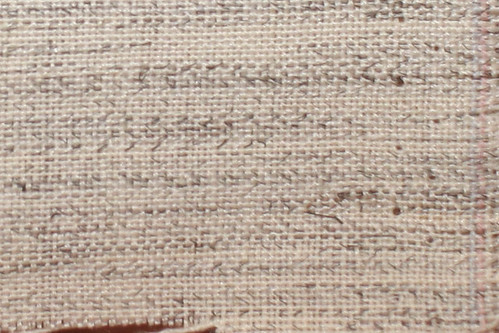
I've been seeing some of what I consider to be inferior quality canvas cropping up and if you're not accustomed to looking for this, you may not notice it. So next time you are shopping canvas, bring a loupe or a magnifying glass.
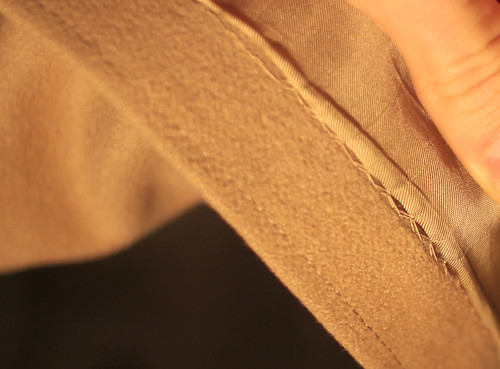
The canvas is woven from yarns which are twisted; the animal hair will be mixed with wool, cotton, and maybe other fibers and twisted to make a yarn. The springiness of the animal hair, when twisted, will cause the yarn, and thus the canvas, to want to curl. To counter this, quality canvas is woven using what we call S and Z yarns (the shape of the letters gives you an idea of what this means); the yarn is twisted in one direction to create the S yarn, and the Z yarn is made by twisting in the opposite direction. This balances the canvas, but is more expensive than making, stocking, and using only one kind of yarn so certain weavers, mainly located in parts of the world which are new to weaving canvas (ahem) are cheating by only using one type of yarn. If you look at the photo above you can see a bit of the chevron which indicates that the weave is balanced.

If you're making up some heavy tweed or English flannel it probably won't matter, but if you're cutting something softer or lighter I would definitely take a closer look at the canvas you are buying.

StumbleUpon.com

Saturday, January 8, 2011

D'Avenza Roma

The next two coats for study were donated by styleforum's RSS, whom I thank, and they have an interesting connection. The first one we will look at was made by the Italian firm D'Avenza followed by a coat made by the English firm Chester Barrie.

D'Avenza

Backing up a bit in time, Chester Barrie was considered by many to be the best manufacturer of ready-to-wear tailored clothing in the world. According to a friend who worked for them at the time, they were importing a lot of Italian tailors to work in the UK; so many that they decided it would be far more cost-effective to set up a shop in Italy, and that shop was called D'Avenza (Paul was then sent to work at this factory in Italy). Both companies are now owned by different owners and are not as well-known as they once were, but both these coats are fairly old so we get an idea of what the factories were like in their heyday.

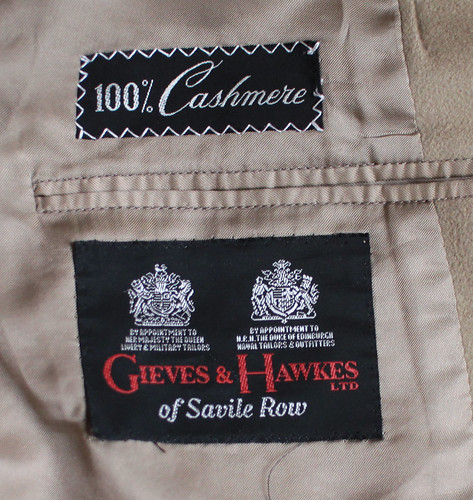
This coat was made by D'Avenza, for Gieves and Hawkes.

Gieves

The row of machine-stitching on either side of the pocket is an indication that this pocket was done manually, as opposed to by automated machine- a very good sign.

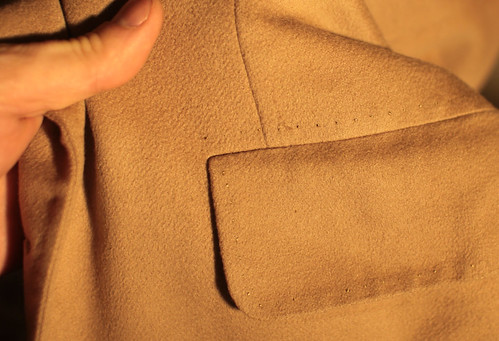
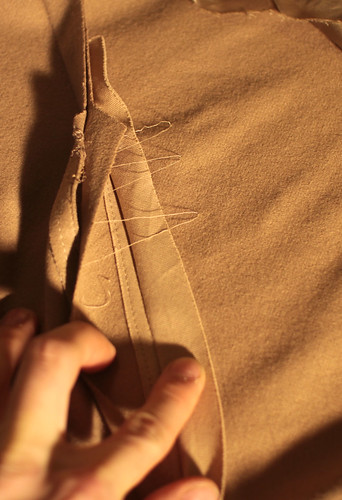
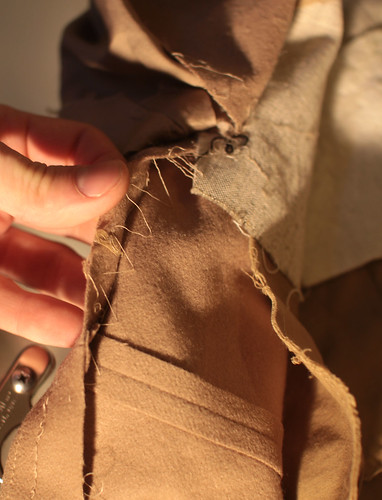
The outer pockets were also done manually- note the lack of pocket jet. The pick stitching was also done by hand.
POcket outside

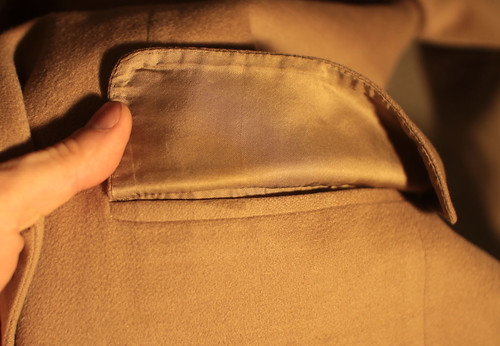
There is a single 3/8" pocket jet under the flap. The only other RTW maker that I know of who does this is Oxxford (another bit of trivia- one of the last designers to have worked at D'Avenza had previously worked at Oxxford in Chicago).

Pocket inside

The buttonholes have been made by hand, and the top one was worked from both sides (another similarity to Oxxford).

BH1

These little cross-stitches on the side vent were done by hand

Hem-vent

Although it is not immediately apparent when we look at the vent finishing,

Vent

when I peel back the lining I see the little double-threaded felling

Vent felling

which, while done by machine, is another indication that this was a very well-made garment.

Getting into the coat, we see that the vent inlays and the hems were felled by hand, and that the vent has been stayed with a bias-cut strip of silesia.

Vent stay

Hem fell

The sleeve head consists of what I call the "kotex" wadding plus two pieces of bias-cut canvas which have ben folded in half to reverse the direction of the hairline. The sleeve head has been inserted by hand, and the armhole has been tacked into the canvas by hand.

sleeve head

The front of the armhole seam allowance has been pressed open

front armhole

but the back has not.

Taping

Note the bias-cut silesia stay that extends from the front of the armhole toward the back. The front of the shoulder has also been stayed with bias-cut silesia. In both cases it is not a true bias of 45 degrees but a partial, 15 degree bias, which holds the area better but still is elastic.

The large part of the chest piece has been cut from wool canvas instead of haircloth, which is interesting as this means the chest of this garment is softer than that of the A&S which I looked at. Note that the canvas has been cut away in the shoulder area.

chest

A first piece of straight-cut haircloth is found in the shoulder, with a 1" spread.

shoulder 1

A second, bias-cut piece of haircloth is beneath the first.

shoulder 2

As is typical, the dart has been sewn using an extra piece of cloth to make pressing it cleanly much easier, and that extra piece of cloth is basted into the canvas after the first row of basting has been done to join the front to the canvas.

dart

Next post we'll look at the Chester Barrie- it will be interesting to see how they differ and in what ways they are similar.

StumbleUpon.com