Thursday, March 10, 2011

Maurice Sedwell

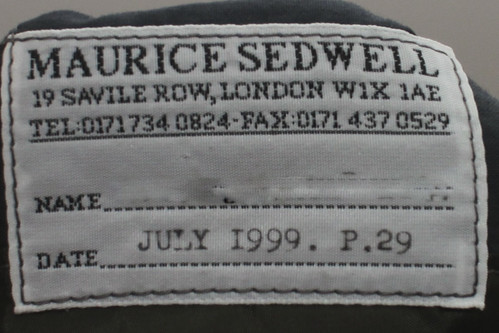
LABEL

The latest sample I purchased on ebay thanks to a tip from RJMan.

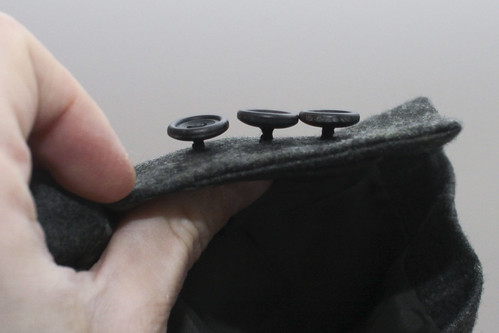
Maurice Sedwell enjoys an excellent reputation and its proprietor, Andrew Ramroop, is very keen on explaining the many reasons why. Of course, one of the first things I look at when examining a garment are the buttonholes and buttons, and these are very good. The buttons have been beautifully shanked and stand up to attention like a row of horn soldiers.
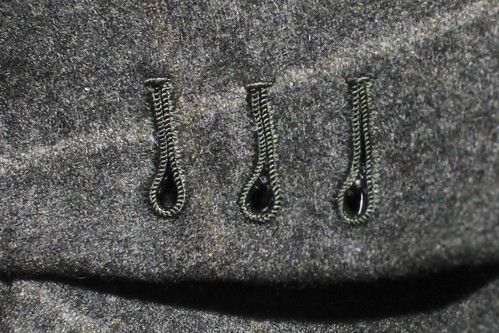
BUTTONHOLES

buttons

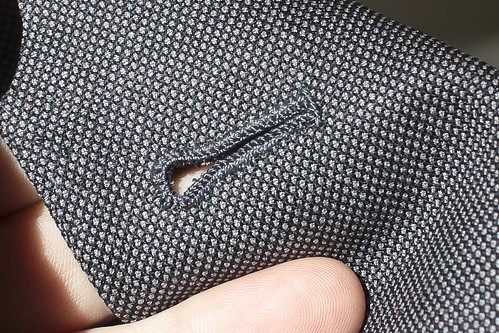
I noticed some light grey thread peeking through the underside of the buttonholes which I found a bit puzzling.
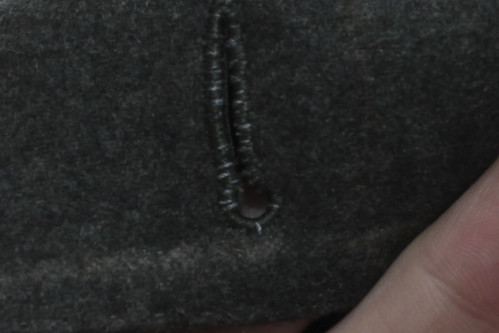
BUTTONHOLE BACK

I unpicked one of them and found that the buttonhole had been meticulously overcast prior to working it up. Why they did it with light coloured thread is anyone's guess, but at least it was carefully done and does not show on the right side.
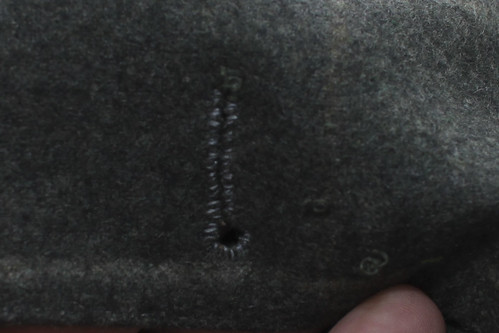
BUTTONHOLE OVERCAST

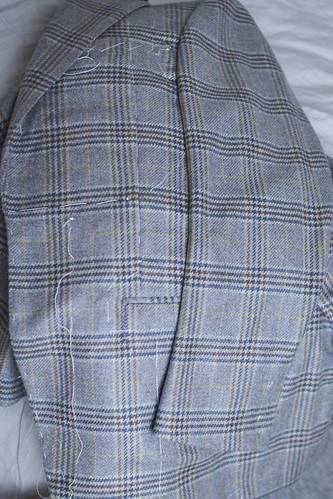
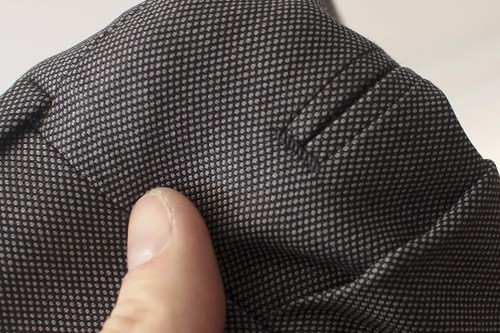
The way he has matched the flap to the coat is somewhat curious. Darts often distort the pattern above the pocket so it is most common to match the flap to the lower part of the coat. In this instance he has matched to the top part, behind the flap. I'm not a fan.
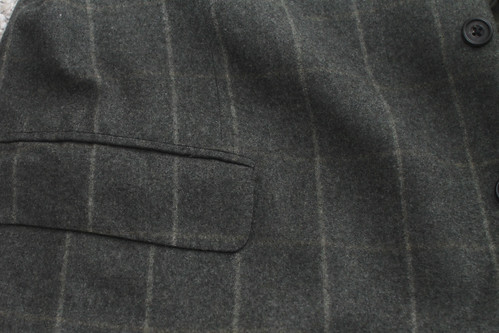
flap

Inside the pocket, he has created a pleat which should help prevent the pocket gaping open when the owner shoves things in it.
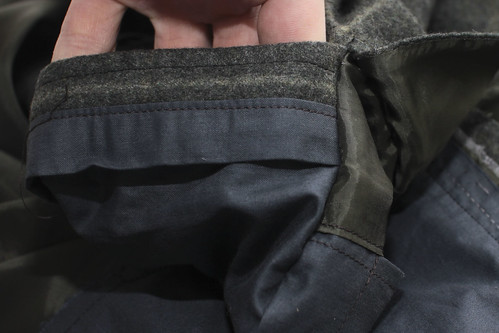
POCKET PLEAT

POCKET PLEAT 2

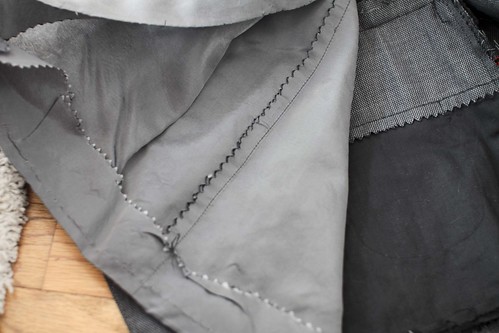
The inside lining has marks that indicate the the garment has been altered so there may be a few question marks.

The lining itself has been inserted by hand, something which few West End tailors do anymore. It's been reasonably neatly done, far better than the Fallan and Harvey coat.

INBREAST POCKET

A piece of linen holland has been used to turn the edge of the undervent, however this was completely concealed by the lining.
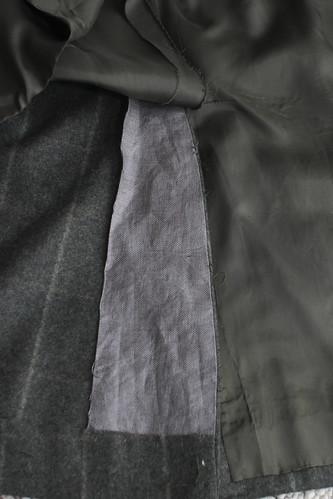
UNDERVENT

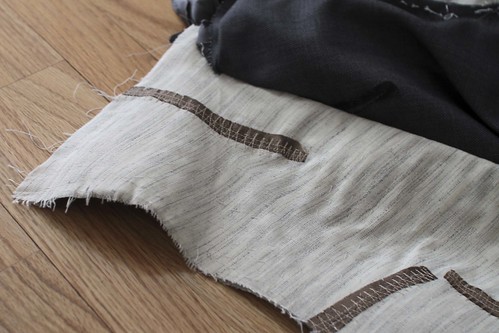
The back hem has been reinforced with weft-insertion fusing.

BACK HEM

Since the front hem has been done with linen holland, I think it is safe to assume that this was done by the alterations tailor.
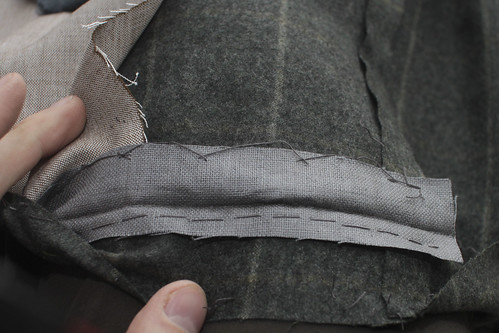
FRONT HEM

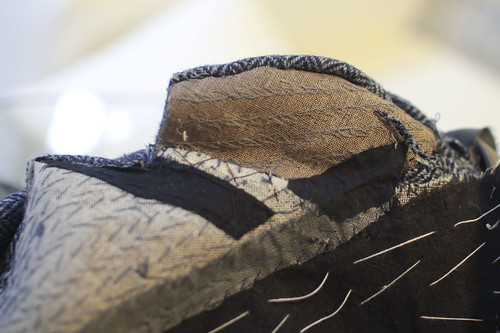
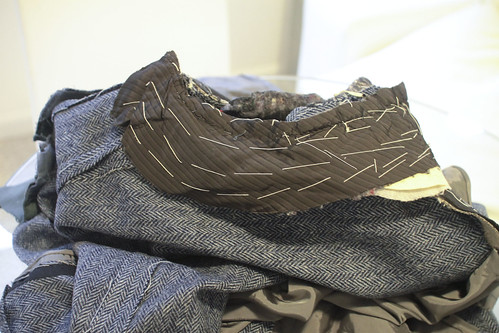
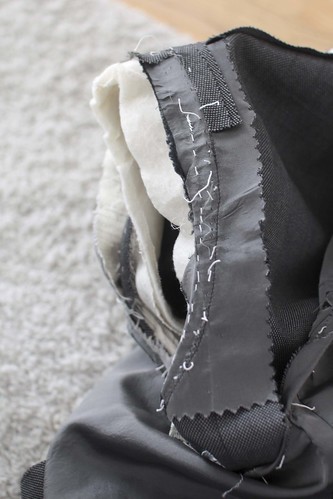
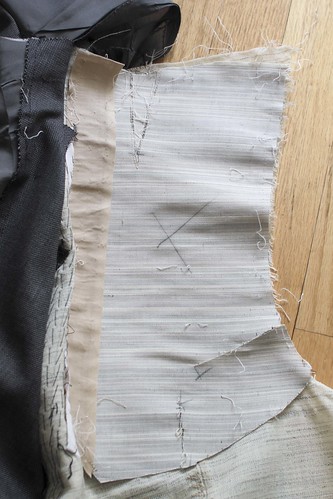
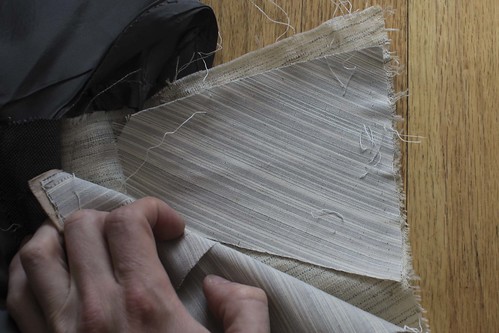
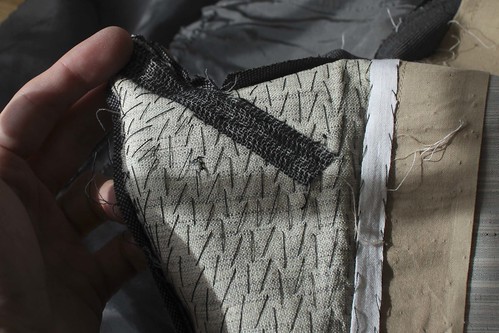
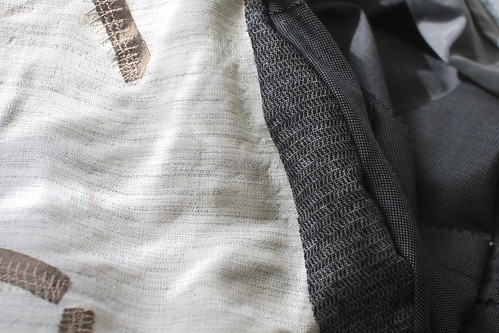
It is no surprise that the chest, lapel and collar have all been padstitched by hand, and a piece of silesia has been laid over the lapel canvas prior to padstitching. The edges have been stayed with linen holland in a method that looks to me like the one used by canvas garment factories.
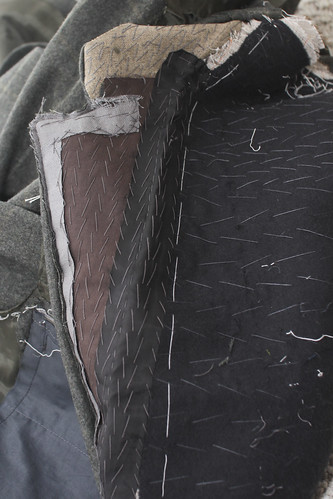
CHEST

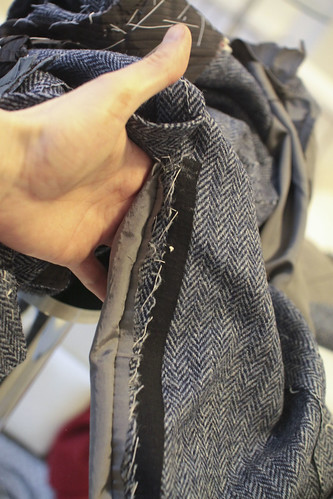
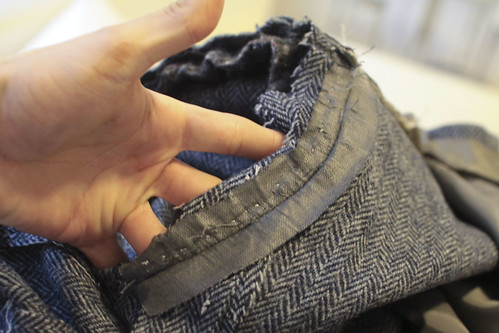
The facing has been applied by machine, and the linen is caught in that seam. I will have to unpick the tape to know for sure if he has done what factories now do.
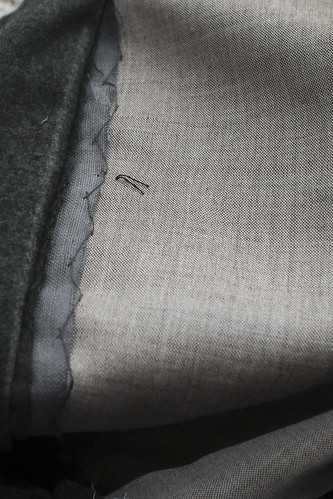
EDGE TAPE

And yes, there it is, the gap between canvas and seam.
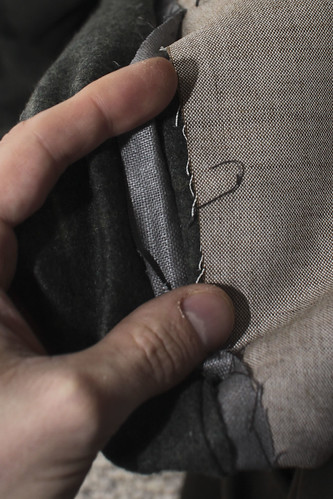
EDGE TAPE GAP

In order to reduce bulk in the edges, we trim away more canvas than is traditionally done. Once the front has been shaped (the excess cut away to the proper shape, leaving only the seam allowance of 3/16" or 1/4") we trim away the canvas not to the seam line as used to be the method, but double the value of the seam. For example, if the seam allowance is 1/4" we will trim 1/2" of canvas away. We sew at 1/4" then turn the seam allowance inside to fill the gap between edge and canvas. The tape is caught in the seam which will prevent the canvas from moving. This technique is most useful on very fine cloth where the added thickness of the canvas at the very edge is not to be desired.

Back to Savile Row.

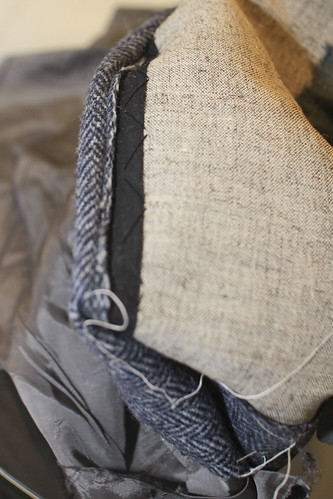
There is needle-punch foam in the sleevehead, similar to what is used by manufacturers, and the shoulder pad is prefab. The sleeves have been set by machine, and the shoulder seam has been sewn by machine. It's becoming increasingly clear that the number of people who think that it is necessary to do these steps by hand are a distinct minority.
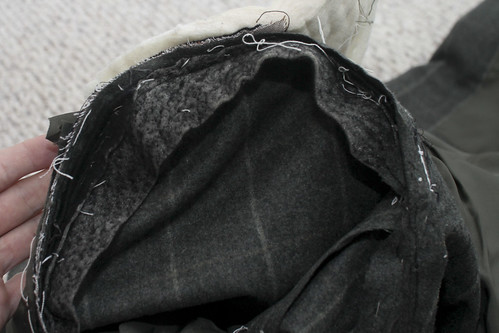
SLEEVE HEAD

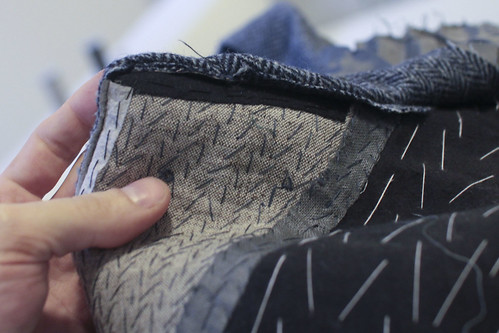
When I got to the chest I could tell that there is only one layer of wrapped hair hymo in the chest, rather than proper haircloth so I didn't go to the trouble of unpicking it all. I have very mixed feelings about this. On the one hand, it is much softer than haircloth and if the customer wanted something very soft, then it's not a bad choice. However I would still have put a haircloth (or even hymo) reinforcement in the shoulder, and there is none. There may be a reason for this as well, which we will never know.
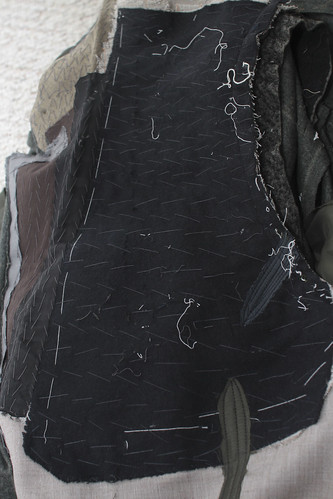
CHEST_1

So is Maurice Sedwell the best on Savile Row? Inconclusive. This is certainly the best Savile Row garment that I have handled but one can't make sweeping generalizations based on a handful of garments. Were I in the market for a tailor in London's west end, I would certainly call on Mr. Ramroop to have a chat.

StumbleUpon.com

Saturday, March 5, 2011

Vintage Fallan & Harvey

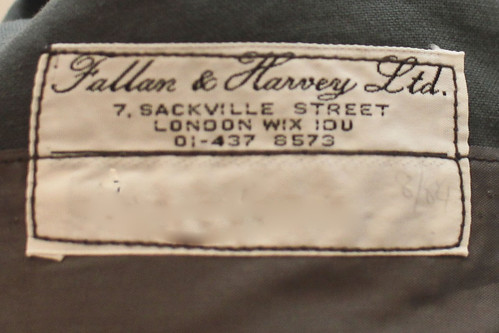
LABEL01

I am beginning to wonder if the 1980's were just dark years for West-End tailors.

The latest dissection candidate, (donated by mack11211, thank you) is a piece by London's Fallan and Harvey, dating to 1984 and it is, at best, underwhelming, coming from one of a group of tailors who are supposed to be the finest in the world. Let's assume, however, that the garment fit and the customer was pleased and that the nit-picking we are about to do would never have bothered him. (On the other hand, when you are being charged for the best, one can reasonably assume that one will receive the best.)

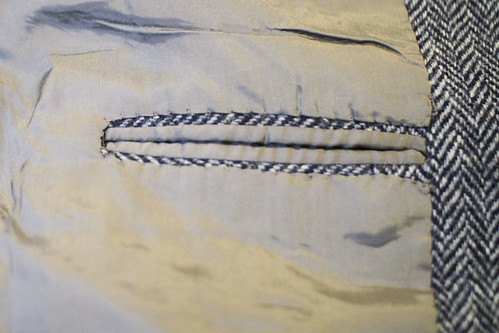
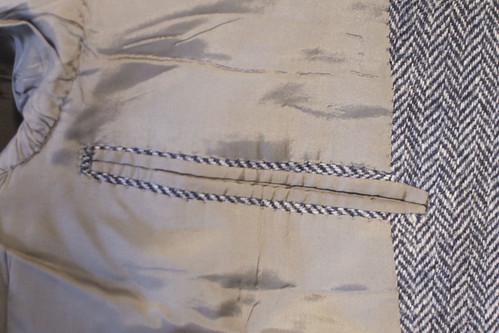
The finishing is sloppy and rather amateurish, but to their credit, the lining has been inserted by hand which is a step that few houses do anymore.

POCKET02

POCKET03

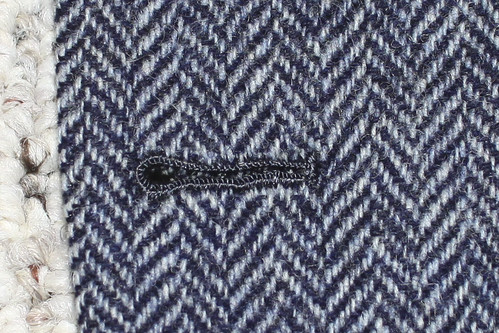
The buttonholes aren't much better.

buttonhole

It is interesting to note that the vent has been fused which will be a sign of either forward-thinking or corner-cutting, depending on which side of the traditionalism fence you sit. Personally, on this weight of tweed, I don't think a bit of fusible will hurt the garment, other than if it were to eventually fail.

VENT04

The edge tape is also fusible, but as on the Welsh and Jeffries garment we looked at, it has also been sewn on by hand. So I am leaning toward "forward-thinking".

TAPE07

Interestingly, the lapel has three different types of tape. The bridle has been stayed with linen holland, the top edge has been stayed with fusible, and the lapel edge has a non-woven which may at one point have been fusible but if it was, the resin has failed. In any case, it was sewn on by hand so it doesn't matter.

LAPEL08

The undercollar has been machined. This is another instance where I don't think hand-padding adds anything of value but traditionalists will squawk.

COLLAR09

The back of the scye has been padded, likely to help with some very prominent blades.

SCYE05

Under the padding we find a linen holland stay tape which shows that the sleeves have been set by machine. Though they see no value in hand-setting the sleeves, the shoulder seam has been sewn by hand.

SCYE06

The chest has been made with one large piece of haircloth and one bias-cut piece of wrapped hair.

CHEST10

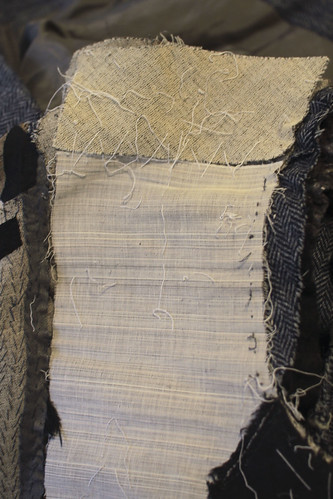
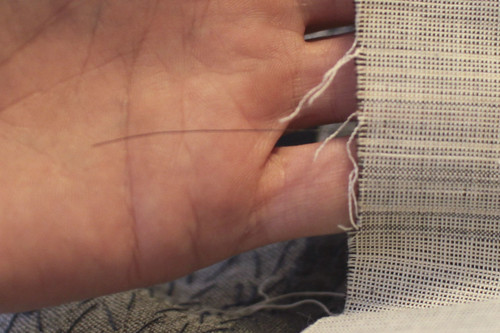
Malwae was asking about canvas qualities and here is an example of a bad quality haircloth. The weave is such that the hair slips right through- I was able to easily pull a strand right through-

HAIR11

This kind of thing is trouble for migration as the hair will start poking right through and bother the wearer. When selecting haircloth you want to pinch the edge and give it a good tug. If the weave grins, as it has in the photo below, avoid it. The hair should be crimped so that the weave is stable and the hair won't move.

HAIR12


This is not the first garment from that time period which was a little dodgy-looking; maybe in the boom that was the 1980s, Savile Row had to pump garments out at such high volume that quality slipped for a while. Maybe this was just a fluke. Who knows. In any case, I am hoping that the quality level has improved in the nearly 30 years that have passed since this garment was made and I will keep my eye out for a more recent example that would show it.

StumbleUpon.com

Saturday, February 26, 2011

Developments

RICE'S02

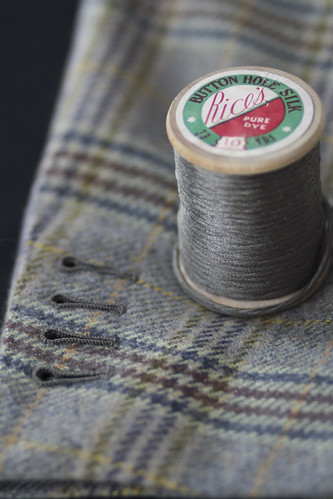
For the buttonholes on the cashmere jacket I settled on a taupy shade from my stash of vintage twist, in this case Rice's. I prefer a finer thread, but it works.

Things that are in the pipeline- dissections of Savile Row houses Fallan & Harvey and Maurice Sedwell, a vintage dinner jacket from a Havana tailor, and a very interesting coat from French house Smalto.

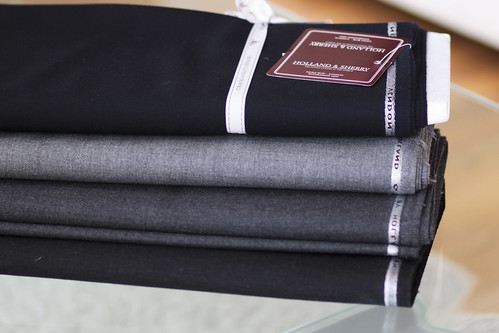
Also on their way- I just bought four lengths of Holland and Sherry suiting on which I will be testing a new drafting system.

Lots of work to do.

HS00

StumbleUpon.com

Thursday, February 24, 2011

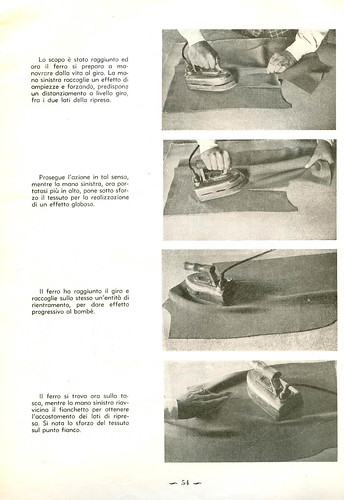
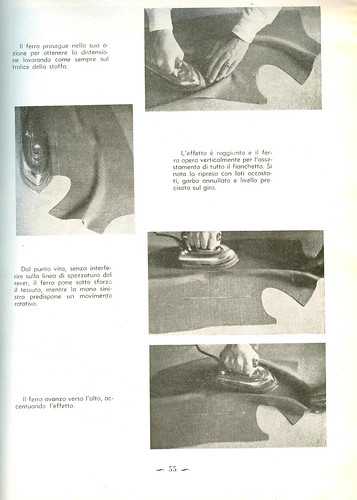
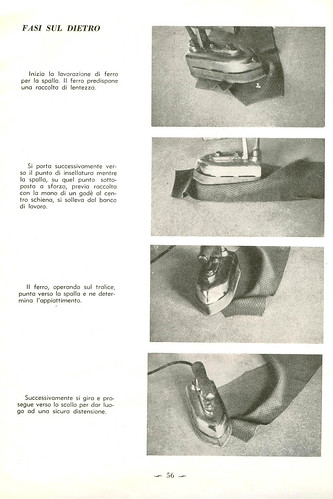
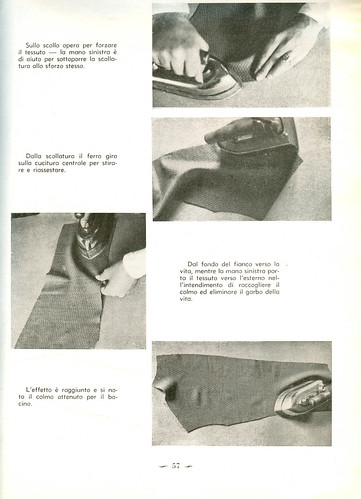
IRONWORK, or Why I Hate Steamers

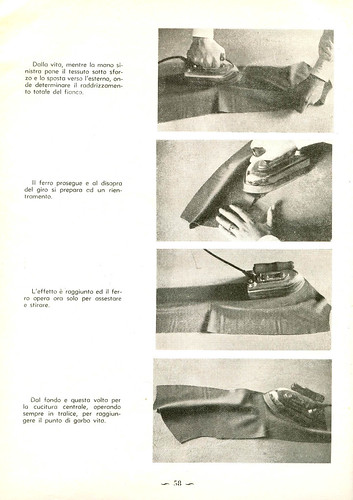
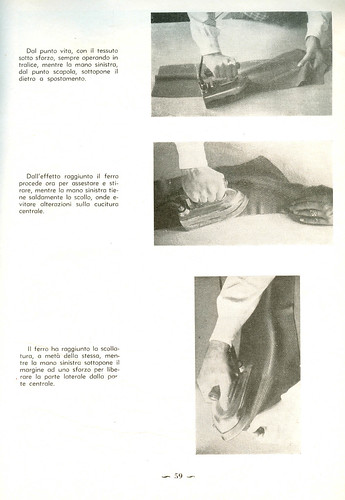
I've ranted a few times about the many reasons I dislike the use of steamers on tailored clothing, but one of the reasons which I failed to fully explain was ironwork. Tailors use heat and steam to transform a flat piece of cloth into a 3-dimensional shape, only some of which occurs due to seams and darts, the rest is worked up with the iron (thus, ironwork).

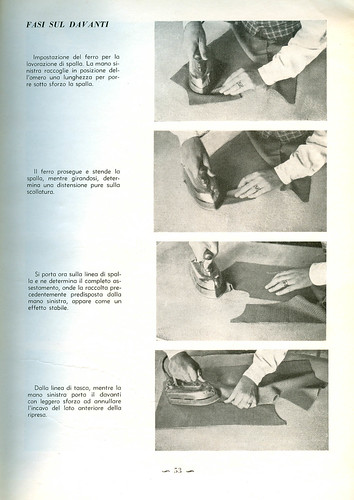
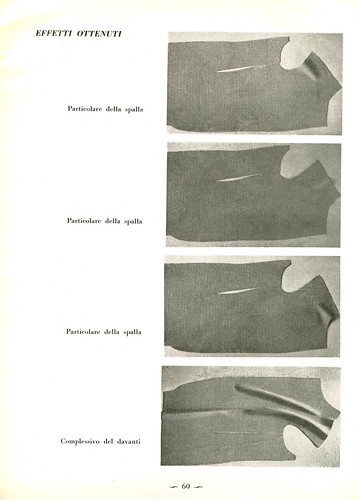
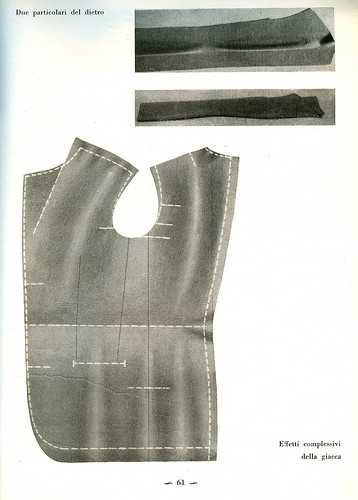
Here's a look at what goes into the jacket before a single stitch is sewn; the trousers get worked up as well, which I alluded to in a previous post somewhere. The pages are nicked from an old textbook entitled (somewhat pompously) Il Sarto Architetto (The Tailor as Architect) and those who can't read Italian will still be able to get an idea of what's going on here. Namely, that a lot of shaping is being done which can be ruined with the aid of a jiffy steamer. You wouldn't notice anything jumping out at you, but the garment just wouldn't have the same shape or fit as before; very fitted or shapely (men's) garments are impossible to achieve without a good deal of this ironwork- something looser or more boxy will have less of it.

Cross-hatch lines indicate stretching and curved lines indicate shrinking.

IRONWORK1

IRONWORK2
IRONWORK3
IRONWORK4
IRONWORK5
IRONWORK6
IRONWORK7
IRONWORK8
IRONWORK9
IRONWORK10

StumbleUpon.com

Saturday, February 19, 2011

Decisions

Elgin23

I'm nearing completion of a sportcoat made out of a somewhat unusual piece of cashmere from Johnstons of Elgin, so I am beginning to think about buttonhole thread.

A check of this nature is sometimes challenging when the buttonholes sit on different area of colour; the normal practice of matching one colour of buttonhole thread might go out the window in favor of matching whatever stripe the buttonhole happens to sit on. I am even reminded of one garment in the YSL couture exhibit on which the finisher had even changed thread mid-buttonhole because the buttonhole straddled two areas of great contrast (yellow and black, IIRC).

The best way to know what will look best is to plan the buttonhole placement to find out where they will sit on the check, and then do a few test buttonholes on a scrap of cloth using different shades of twist. Fortunately I have that stash of vintage twist so I have a number of colours to choose from.

StumbleUpon.com

Saturday, February 12, 2011

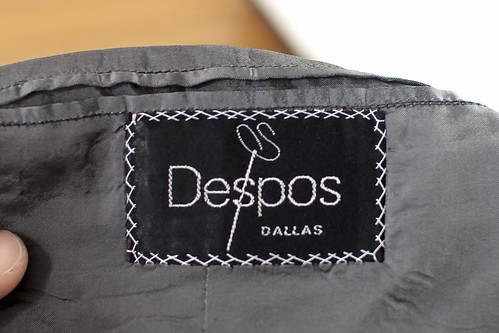
Despos

Despos04

In the world of tailored clothing, there are houses that are, in my opinion, seriously overhyped, and others who deserve a lot more attention than they get. Chris Despos falls into the latter category.

Based now in Chicago, Chris once operated out of Dallas, a city he frequently travels to, in addition to others, so if you are looking for one of the country's (perhaps one of the world's) top tailors outside of the Manhattan area, you can find him in his Oak Street studio.

Many thanks to Chris for donating this suit to science.


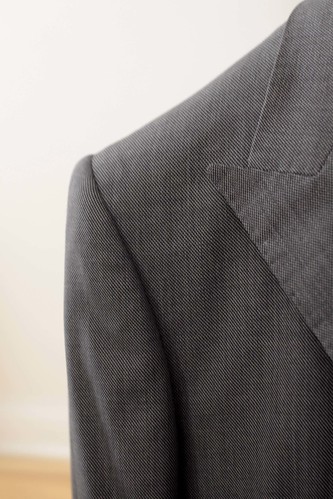
One of the first things that sets my bells ringing is this shoulder.
Despos06

Though currently out of favor but perhaps enjoying a return of sorts, one of the reason that this type of pagoda-shaped shoulder is not so commonly seen is that it represents the pinnacle in terms of difficulty of execution. In other words, it may look odd to many people because they are not used to seeing it because so few can do it right. This kind of shoulder goes beyond just aesthetics- it is actually made to conform more naturally to the actual shape and forward pitch of the human shoulder, and there is a great 3-dimensionality to it. In movie terms, this shoulder is the Avatar to so many Creatures From The Blue Lagoon. You'll be able to see what I mean a bit later in the post.

This suit was made back in 1992 but as we saw in a previous post, has held up really well despite its being made in a super 150s cloth. Chris will be annoyed with me when he sees that the coat has been sitting in a heap since my last post and is thus in need of a pressing, but another annoyed reader commented that they wanted to see more of the garments than just the guts.

Despos01

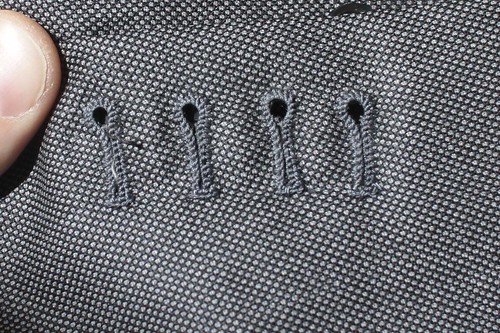
Some buttonhole porn, for those who are into that. These buttonholes are gimped with a single strand of buttonhole twist, instead of the type of gimp I use, so readers who are experimenting with buttonholes and don't have access to the Agreman gimp, here is proof that you can get perfectly good results without it.
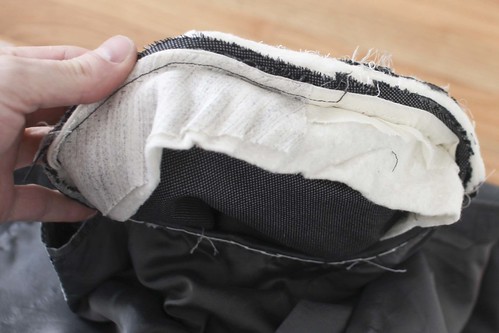
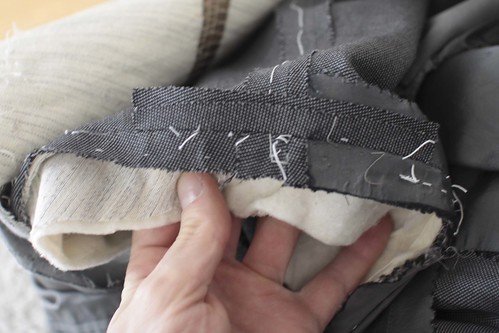
Despos02

Despos03

Here's something we don't see all that often anymore; the outlets and cut edges have all been pinked (cut in a zig-zag edge). This prevent the edges from fraying, especially the lining which can get really messy, and may also help to prevent seam impressions.
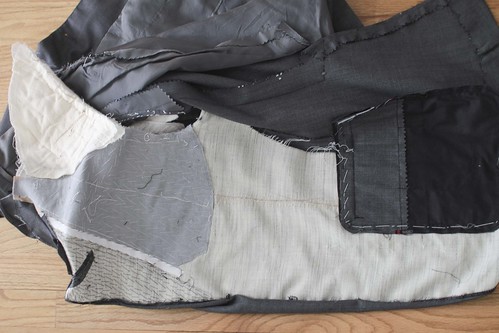
Despos05


The sleeve head wadding is of the Kotex type, but this has not disintegrated at all. In addition, a single, bias-cut piece of canvas reinforces the front of the sleeve.

Despos07

The back of the scye has been stayed with a piece of lining which has been backstitched by hand.
Despos08

An extra strip of self cloth has been inserted at the cap of the sleeve for smoother pressing.

Despos09

Though it doesn't show in photography, it is worth noting that the sleeves (which are very large, thank you) have been sewn into the (very small) armhole BY MACHINE. The shoulder seam has likewise been sewn BY MACHINE. I don't think that these two steps need to be done by hand, and here is an indication that neither does Despos (nor does Henry Poole, for that matter). His opinion on the matter may since have changed and if it has, I am sure he will share it with us.

A full view of the coat front shows that his chest piece is of a moderate size, and has been worked up by hand.

Despos10

A closer look shows some of the cuts required to shape the shoulder.

Despos11

And now for a better look at what I mean about this shoulder shaping.

The pocket that has been created for the shoulder bone is very obvious here. This room is very important to the comfort of the garment- garments whose weight sits on the shoulder point are uncomfortable and don't move as well with the wearer. For this reason, shoulder seams which angle backward (and thus make it more difficult to get this forward pitch of the shoulder) are counter-productive, in my opinion.

Despos12

Even after 20 years, this shoulder has maintained its shape.

Inside the chest we see the various cuts in the haircloth which build shape, and a strip of beige silesia covering the roll portion to prevent the hair sticking through.

Despos13

A bias-cut shoulder piece is found, as expected, but somewhat unexpected is the hairline; I am more accustomed to seeing it running up toward the outside of the shoulder, but whatever works...

Despos14

A piece of weft-insertion fusible is used to stabilize the bias grain of the peak lapel.
Despos15


The lapel itself feels a little meatier than I expected so I rip some of the padstitching to have a look underneath. Sure enough, more weft-insertion under the lapel to give more volume to the roll.

Despos16

I won't dwell too long on the pants, other than to say their execution is some of the neatest I've seen from the many examples of bespoke work. A few details of note, though, are the buttonhole-stitch bartacks at the end of the pockets,

Despos17

Waistband extensions are more commonly square, as they are much easier to finish than the rounded type, as this one which requires much more work and precision.

Despos18

Despos19


My general impression is that this garment is neater than the majority of examples I have seen from Saville Row houses, and in many instances, more care has been given in its execution. More work went into this garment than the Caraceni that we saw, and the house is legendary. So while the name may not carry the same appeal or cachet than some of the other, more famous houses, the level of workmanship takes a backseat to none of them.

EDIT- disambiguation. There are a number of different results when googling Despos, so to be clear, this is Chris Despos, who is located at 34 East Oak Street, Chicago, Illinois- contact me for the phone number or email address if you need it.

StumbleUpon.com