Monday, February 13, 2012

Ralph Lauren Purple Label

Every once in a while a nice surprise comes along.

RLPL

I was contacted by Lance at Virtual Clothes Horse to see if I would be interested in a garment he had. A Ralph Lauren Purple Label sportcoat made by Raffaele Caruso, which, by itself, was intriguing. What was most interesting was that this one was recent, new, and had all its tags. Usually I have no idea of the age of a garment, and more often than not, it’s pretty old and not reflective of current workmanship. In this case, it’s safe to say that it’s pretty current. It was a MTM garment that was unclaimed by the customer and whose size was such that Lance felt he would have a hard time moving it so he ended up donating it to us. Thanks Lance!

Before we start cutting, a reality check.
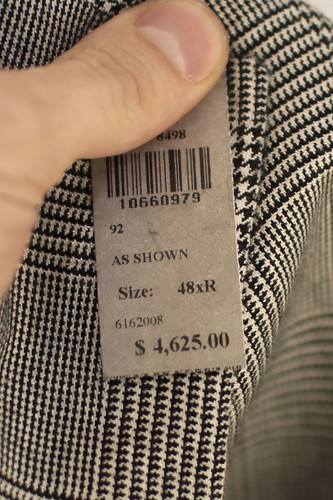
ouch

Ouch.

The garment is made of cashmere and silk, a blend that is normally so flimsy and unstable that it’s a real headache to sew. But this is a fantastic 2x2 construction that is robust and shows no sign of the distortion in the grain or any of the seam slippage that is so typical of this blend. Certainly a contributing factor in the price.

Readers are, by now, aware of my buttonhole fetish and so will not be surprised to know that one of the things I most eagerly anticipated were what promised to be sensationally hand-made buttonholes. To my only partial dismay, there were none. Not one. Which actually makes a lot of sense. Not only are the sleeves basted in preparation for final adjustments before cutting the buttonholes, but the omission on the front and lapel leaves the possibility of making certain adjustments to the fit of the front which would have been impossible had the buttonholes been cut. Whether this was a special request by a very particular salesperson or client, or whether this is the usual practice for Purple Label MTM service is unclear, but at almost $5,000 one has every right to expect a properly-fitting garment so every precaution should be taken.

Inside the pocket we find this attractive pouch holding the buttons and, of course, a spool of silk buttonhole twist.
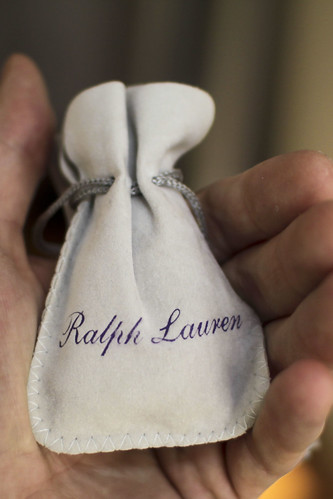
pouch

The twist is Seta Bozzolo Reale by Cucirini Tre Stelle which I mentioned in previous posts. It is distributed in the U.S. by Gilbreath Threads, who can be contacted at 800-247-2396 or by clicking here.

bozzolo

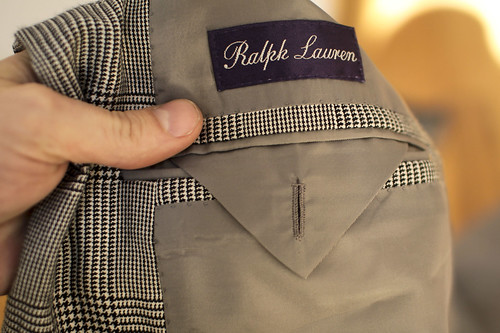
Ok, so I lied. There was one buttonhole.
envflap

The envelope flap on the inside pocket had a buttonhole embroidered by hand.

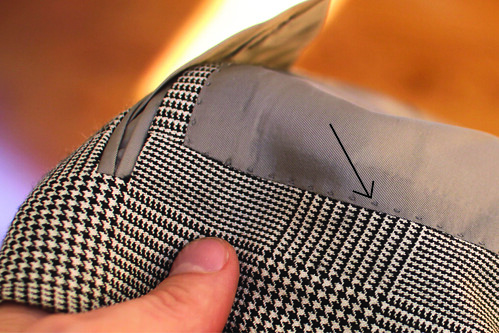
Along the facing edge we see some pick stitching. I often see ebay descriptions of garments referencing “tons of handwork”, usually describing this stitching, among other things.
Print

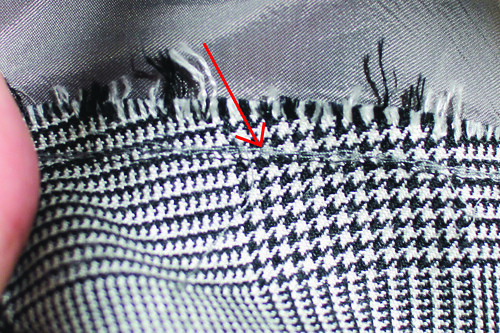
I hate to break it to you, but this was not done by hand. Two types of machine exist to make this kind of imitation hand stitch. This stitch was done with a machine that makes a looping stitch on the wrong side,
Print

Because the underside is unattractive, it’s usually used only on parts whose wrong side will be concealed, like the facing, and sometimes the trouser pockets and fly. Never on the coat edges.

Before anyone gets their knickers in a twist over “deceptive practices”, even the Kiton garments I examined had used this exact type of machine stitch.

The other type of machine is made by Conti Complett. The underside of this stitch, unlike the other type of machine, is neat and resembles the hand stitch it is meant to duplicate. The downside of this machine is that it is slow and very expensive.

The label was stitched on using a Complett machine; notice how very uniform the stitching is on the underside- only a machine will be this precise.

complett

Now have a look at the underside of the flap- nothing at all like the label, so it is most likely that the edge stitching was actually done by hand. Very few RTW makers do this by hand anymore because the machine generally does a good job.
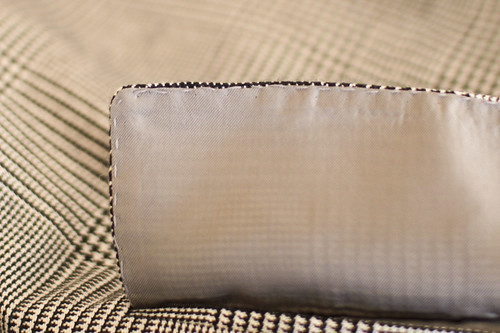
under flap

Of interest to some will be the old-school vent finishing which is rarely seen on ready-made garments-

VENT


However the bottoms have been finished by machine, a step some makers at this level still do by hand.

hem

The front canvas is very generous, and rather than using haircloth in the chest, a very good quality wrapped hair has been substituted. This is similar to what we saw in the Saint Andrews garment and gives a softer feel to the chest.
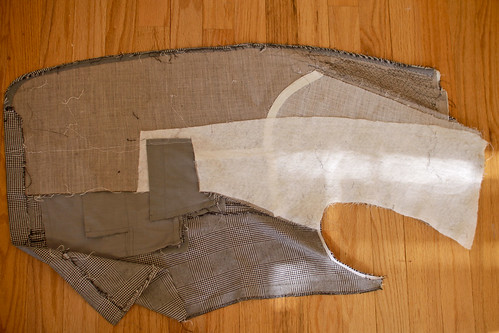
CANVAS

Notice how the edges of the chest piece are taped to prevent the hair from poking through.

No surprises to find a semi-bias piece of haircloth in the shoulder
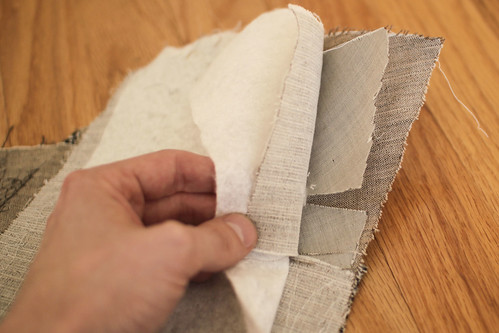
shoulder

What is somewhat surprising is the size of the pad- this is the thickest pad I have seen in RTW for a long time. Mr. Lauren is known to appreciate a more imposing shoulder than some of his American colleagues.
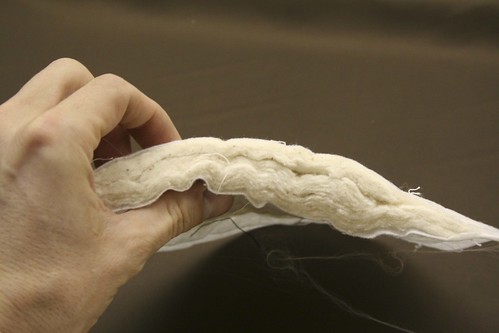
PAD

The collar is seamed at center back- again, very old-school
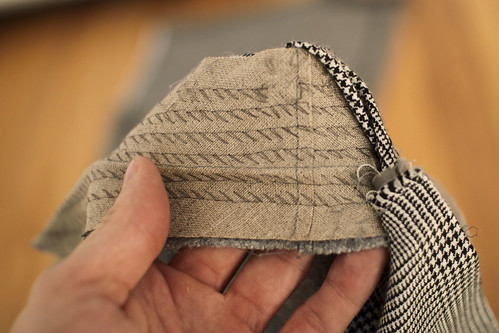
collar

In fact, the entire collar has been constructed and attached by hand, including the gorge. Very nice.

Portions of the edge tape have been felled by hand.
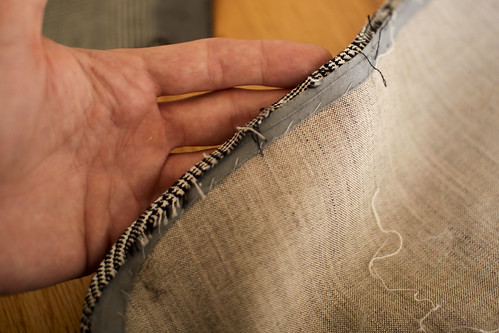
edge tape

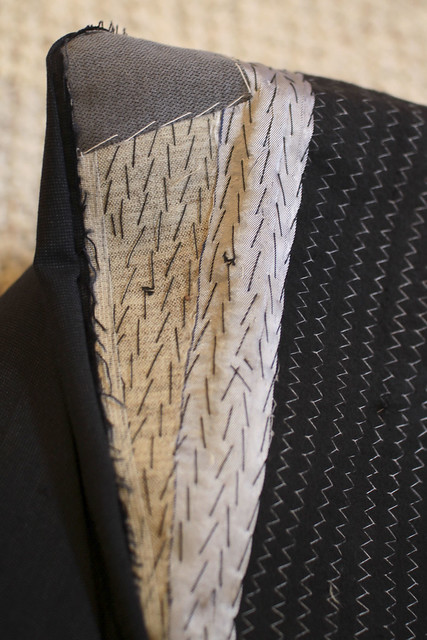
There was something about the edges of the coat that caught my attention but I couldn’t quite put my finger on it. Upon (much) closer inspection I found that the entire facing had been drawn on by hand. In other words, where most (including most bespoke tailors) would join the facing to the coat along the front edge by machine, this facing has been carefully basted in place, wrong side to wrong side, with the edges turned under and then slip-stitched by hand all along the edges, and they have done a magnificent job of it. The Brioni dinner jacket is the only other RTW garment I have seen which featured this technique, and only few bespoke pieces were done this way. I was intrigued so I made a few inquiries.

Paul Farrington, the technical designer at Hickey Freeman, visited the Caruso factory recently. Paul spent his early years at Chester Barrie, including a stint at D’Avenza. He told me that the system used at Caruso was brought first from Chester Barrie to Saint Andrews in the late sixties, and then to Caruso by a technician named Frank Vita. To augment the old-school tailoring is a decidedly new-school tech system which has bar-code driven PCs at every station so operators can reference specs, components, and sewing instructions. This kind of system allows for minute adjustments and customization the likes of which most of us in the trade can only dream. Paul did say that the regular production gets machine-sewn facings- only certain garments are done by hand, which makes sense since I am not aware of their house label selling for such astronomical prices.

This garment definitely ranks up there with some of the best of the recent ready-made garments I have examined- I’m going to have to try to get my hands on a trouser to see how those are made as they promise to be just as interesting as this coat.


StumbleUpon.com

Tuesday, January 31, 2012

Asola Lucida- a lightbulb goes on...

So I had another little moment of insight. Or maybe my thickheadedness deserted me briefly.

I was contemplating my lapel buttonholes last week, the by now infamous asola lucida ones, that is, and finding them just too chunky, especially when compared to some nicer ones like the Tom Ford. The thread I am using is just too heavy.

To wit

Mine

asola6

And theirs

buttonhole

Silk buttonhole twist is only available in two sizes these days, the finest being size 40, which is the one I use. But still, it is not nearly as fine as the thread used on the nicest lapel buttonholes. So I was wondering where I could find both buttonhole twist and a much finer thread but offered in the very same colors, something I have never seen before. Then I had my little idea.

Buttonhole twist is 3-ply- that is to say, it has three yarns (rather than the typical two) twisted together to form the thread. If I were to strip the twist down, I would have three very fine threads to use, solving my problem. Of course, such a fine thread would require three times as much work to cover the same space- I think it was Francesco Smalto who said that 140 stitches are required to execute the asola lucida. Using a thread this fine, I believe him. Compounding the difficulty, a thread which has been stripped can be difficult to work with. It's just the sort of punishment I seem to enjoy inflicting upon myself in order to make a pretty buttonhole, and another detail over which to obsess for a while. So I started ripping apart the buttonholes on a few of my jackets, pulling apart silk twist, and reworking them over again.

Obsessive Buttonhole Disorder. I wonder if they make a pill for that...

StumbleUpon.com

Wednesday, January 18, 2012

O'Mast

My copy came in the mail this week.

O'MAST from Kid Dandy on Vimeo.


One of the few pleasures that I have derived from working in tailored clothing factories, as opposed to working in a tailor shop, is that there are invariably a sizable group of old guys from the old world who like nothing better than to sit around, shooting the breeze and talking about what life was like back in the day. Back in the day meaning, of course, back in Italy. I could almost write a book. In fact, maybe someday I will.

O'Mast, a documentary by Gianluca Migliarotti, is an intimate portrait of some of the last remaining Neapolitan tailors and their clients. Perhaps lacking in a definite story or arc, it was exactly like sitting around on a coffee or lunch break with the guys. Only missing was coffee. While the stories had an immediate appeal for me because they were so familiar, one thing jumped out at me for the first time, if only because of the context of some of the recent political discourse.

(If you're interested, and if you are a regular reader of this blog I should think you will be interested, the DVD is only about $25 and cad be had at the Armoury's website. The Armoury is in Hong Kong but shipping was super fast.)

It's a story I have heard a thousand times if I have heard it once. At age 11 or 12, a young boy would be sent to the tailor shop to apprentice. Maybe after school. Maybe afternoons. Maybe he would drop out of school entirely. His pay, if he were lucky enough to get any, might be 100 to 150 lire a week. He would ride his bike from his village several miles to the nearest bus or train, where he would spend his weekly salary on train fare into the city. The lucky ones might have enough left at the end of the week to buy a cup of coffee, though not likely. At Christmas the master expected a gift or tribute of some sort to thank him for the time he spent training the young apprentice. The system produced some of the best tailors in the world, and helped drive the eventual cachet of the "Made in Italy" brand.

Perhaps I have become desensitized to the story, having heard it so many times. More likely I can relate in a sense since, like so many other pursuits, it is generally agreed that one must start early in life in order to gain a proper mastery; piano lessons, ballet lessons, gymnastics... those who become successful at these pursuits are more likely to have started lessons at age six than at age 20. Something to do with the 10,000 hour rule.

Those readers who are fortunate enough to be insulated from the Republican primary season here in the U.S. will have missed Newt Gingrich's recent assertion that poor children should be made to work as janitors in school. My initial reaction was, naturally, one of shock and indignation. He did, suggest, however, that they be paid some sort of wage, which is more than can be said for the tailor's apprentice. So what was a charming story about learning the craft of tailoring now has the taint of child labor. How do I reconcile the two?

I'm not sure that I can.

It's one thing to say that it was an economic necessity and a part of the harsh reality of post-war Europe that children had to be sent out at a young age to work, essentially, for free, with the only benefit being that they were learning a marketable skill. But the same logic could be applied to Newt's argument and I'm not sure that's a good thing. It also highlights the question of whether such a training regimen was really necessary in order to create the generation of craftsmen that is currently disappearing and is not likely to be replaced without such a draconian system of apprenticeship.

While I am certain that each of the tailors interviewed in the film would tell you that they were entirely thrilled to have had the chance to apprentice as they did, I am equally convinced that not one of them would send his own child out to repeat the process.

I don't really have a point here. I'm just thinking out loud. In print. Whatever.

StumbleUpon.com

Saturday, January 7, 2012

More experimentation with drape...

Wow. It’s been a while. Let me start by wishing everyone a happy new year!
In the past six weeks I had been home all of five days, and non-consecutive ones at that so I’m way behind in all of my projects. The Ariston coat is long-finished but I need to photograph it and now I have a small pile of cloth to cut.


J&J Minnis was having a sale- the Crown Classics bunch was being offered at twenty pounds a meter plus VAT. So it’s time for another experiment.

Some time ago I experimented with drape, referencing a draft manipulation published by Whife in the Modern Tailor, Outfitter and Clothier. I had seen a number of published texts on the construction of a drape coat but had never handled the real thing so I kind of made things up as I went along, in terms of construction. The finished result was this.

IMG_8884a

IMG_8886a

Some of the details were goofy but the silhouette wasn’t bad.

Then I bought this vintage Anderson & Sheppard coat and learned a few things.

AS FRONT

Most particularly, about how the drape in the chest is achieved by cutting the haircloth away from the armhole.

chest open

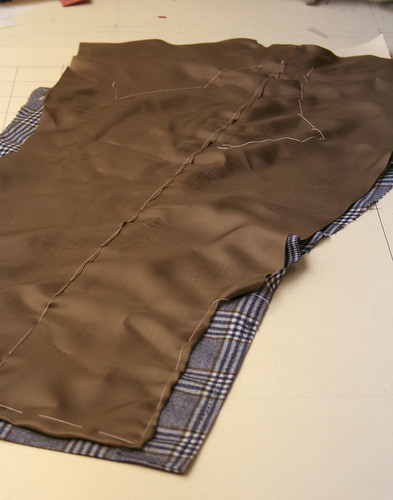
So this experiment is two-fold. First, the piece that I bought from Minnis is dark brown with a chalk stripe. I have never owned a brown suit and I’m not sure if I will like it or not. One way to find out, right?

Second, I will try this drape thing out again, but this time with an eye on the A&S coat. I like the shape and the flare to the skirt, though it’s perhaps verging on costume. The one thing I’m not really sure about is the chest. While I agree that the chest emphasis flatters me, as in the first attempt, I don’t think I can stomach a proper drape, with the haircloth cut away from the armhole, on a suit. I think I’m just too stuck in my ways for that. So I may keep the full haircloth in the chest. At which point it begins to resemble a Tom Ford cut.
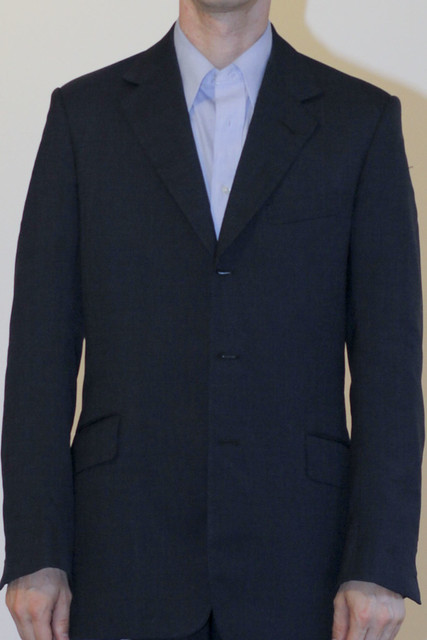
Hmm.

We know that he was a customer of A&S before starting his own men’s line. So it’s very possible he went through the same thought process- extend the shoulder a bit and emphasize the chest to create the illusion of more waist suppression but build the chest up with a good amount of haircloth so that it’s clean and not sloppy. I’ve heard people moan about the fact that he was just copying this one or that one, but really, who isn’t inspired by somebody else? A&S was “inspired” by Scholte who was “inspired” by military uniforms…

One last question mark that remains in my head. Normally when underpressing the fronts, we keep the stripes closest to the armhole completely straight from the waist up to the top, working the chest forward toward center front. Since the objective of the traditional drape cut was to have a fold of cloth near the armscye, I figured that working the chest forward would negate that fullness near the scye and on the last coat I didn’t straighten them out. It seemed to work, but this time I think I’ll stick to the rules about stripes and see what happens.

So in all a lot of risks and a good chance I’ll end up not liking the suit. But at twenty pounds a meter at least it’s not an expensive risk, and worth the investment for whatever I might learn out of the process.

EDIT

My bad- I should have been more clear about what I mean by "drape". I'm not referring to the drape of the cloth or the patternmaking technique of draping, but to a style of coat that was created at the turn of the last century, was very popular in the thirties and virtually disappeared in the fifties. A primer, as well as the draft manipulation used for the last garment can be found here.

EDIT

In response to a question about underpressing the fronts, the stripes act as a guide for the correct pressing, and this is a critical step before basting the canvas. The stripes nearest the scye must run absolutely straight from the shoulder down to the waist line (this will cause a distortion in the stripes forward of the dart- this is normal). The stripes closest to center front must run straight from the waist down to the hem. This has the effect of crookening the shoulder point a tiny bit during pressing, but is separate from the issue of whether it is a straight-cut or crooked-cut coat. Hope this is a bit clearer now.
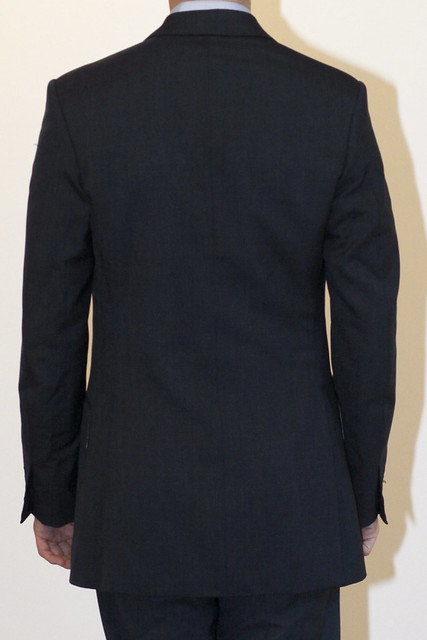
Print

StumbleUpon.com

Monday, December 5, 2011

Been busy lately

There have been a lot of questions lately which I promise to get to at some point, but I'm on the road these days so it's a bit nuts.

So in the meantime, some buttonholes.

BC2

StumbleUpon.com

Friday, November 18, 2011

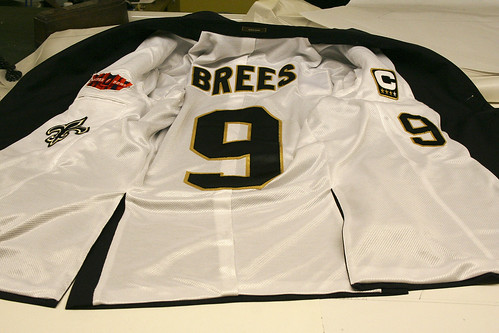
The Brees Blazer again

Remember this?

brees blazer

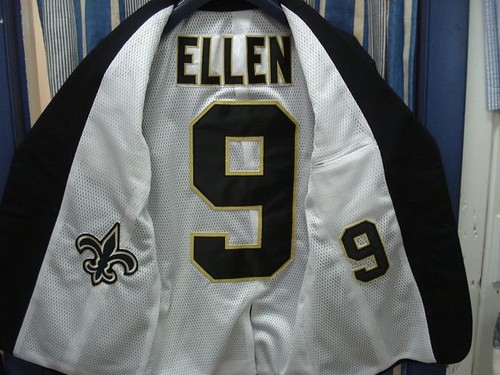
I made this jacket last year, just before leaving Canada. Ellen Degeneres saw it and liked it so Drew had one made for her (not by me- my contacts within that camp don't know where to find me these days) and will be presenting it to her on Monday's show. I saw a post on facebook which is how I found out about this coat-

ellen

StumbleUpon.com

Monday, November 14, 2011

Prepping the back

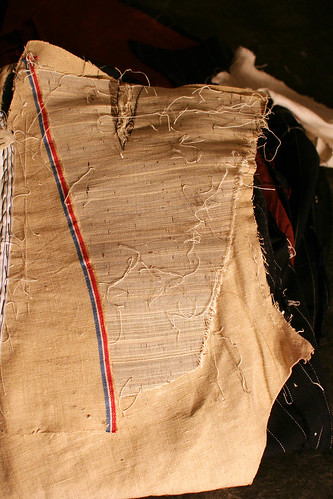
back

StumbleUpon.com

Friday, November 11, 2011

Roll

roll

canvas

IMG_4808

StumbleUpon.com

Thursday, November 10, 2011

Ariston Napoli

Just because.

ariston_1
ariston

StumbleUpon.com

Monday, November 7, 2011

Ariston Napoli

Ariston

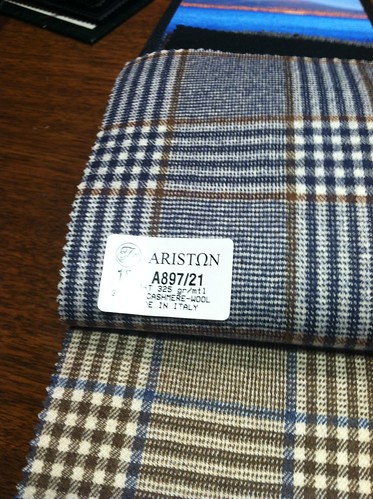
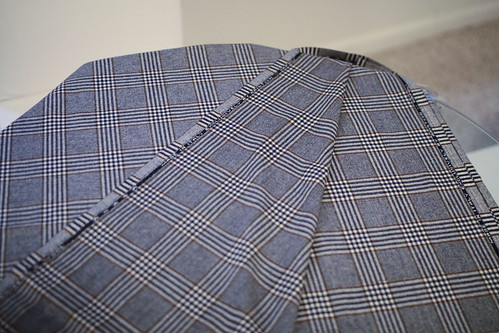
Fans of the bold, colourful cloth typical of many Italian merchants (especially Isaia) will love Ariston Napoli. This latest piece- a blue and brown check- comes from them, and is surprisingly robust for an Italian cloth. They are represented in the U.S. by Kemp and Hewitt.

StumbleUpon.com

Friday, November 4, 2011

Silliness with scraps

Far from random, some careful planning is required, the sort that only another patternmaker can really appreciate.

IMG_9127

vendon2

StumbleUpon.com

Thursday, October 27, 2011

The very last of the vendon


This time I mean it.

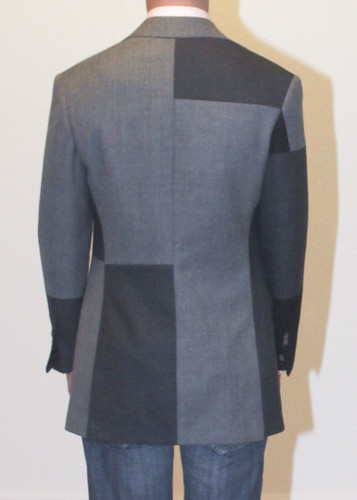
So I had some scraps. And maybe a bit too much coffee.


vendon

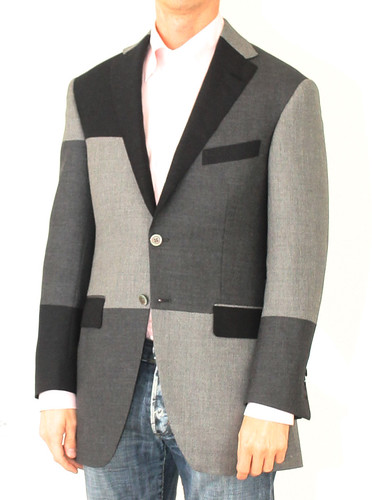
I don't like most of what Thom Browne does, but I understand why he does it. And all those guys who you see in the Sartorialist's Pitti photos. It's not that we're trying to get photographed (ok maybe some are). It's just that those of us who are surrounded by grey and navy suits day in, and day out, who deal with them all day at work, who already have a closet full of grey and navy suits and when it is time to make something new for this season the thought of making yet another grey or navy suit, well, just yyyaaaaaawwwwwwnnnnnn. It takes something a little more unusual to excite me these days. I mean, how many professional musicians walk around with the Four Seasons or Pachelbel's canon in their iPods? They're more likely to have Arvo Part or Meredith Monk, or something most non-musicians won't get because I-IV-V-I has become as mind-numbing to them as the charcoal suit is to me.

Or maybe I've just had too much coffee.

StumbleUpon.com

Saturday, October 15, 2011

The Last of the Vendon

HS00

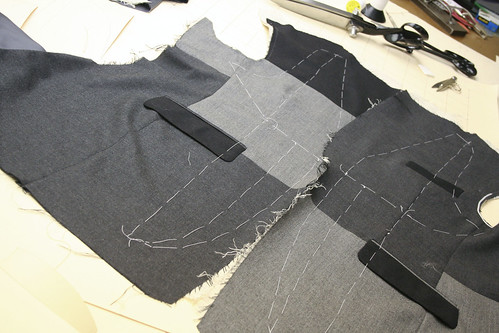
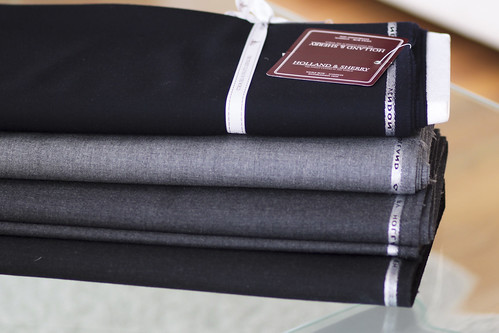
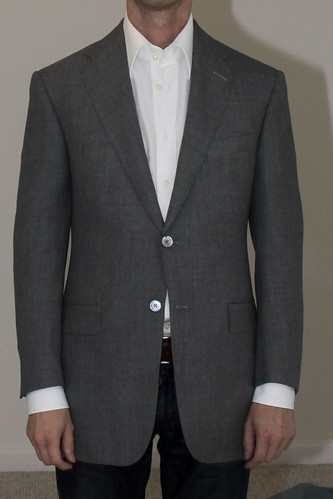
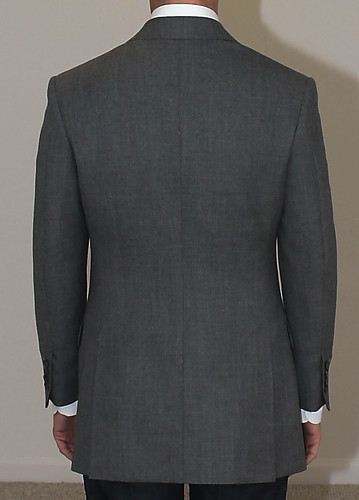
I bought these four pieces of Vendon by Holland and Sherry back in February and I am just now getting the last of them finished. It's a great cloth- a robust weave which is normally quite dry but this has a roundness to it and even a nice soft finish. If memory serves, there a few other colors; I may go and see if there are any left to pick from. At the same time I am going to have a browse through the Ariston bunches- a Neapolitan merchant who makes just the sort of horseblanket and FU checks that I love for sportsjackets (some of the louder cloths that Isaia and Oxxford use are from Ariston).

You'll notice that the shirt sleeves are far too long- the shirt is new and has only been washed once so I expect they will shrink some more. I had three of them made from a very opaque white cotton from Thomas Mason, I believe (I don't remember the name of it, but Joe from MyTailor tells me bought a whole lot of it) and I have actually had people stop me in the street to ask about my shirt so if you are in the market for white shirts and go see Mytailor, ask Joe about- he'll know what you're talking about.

vendon1

vendonback

In other news, I closed on the condo last week so I'll be moving again, hopefully for the last time in a long while!

StumbleUpon.com

Monday, September 26, 2011

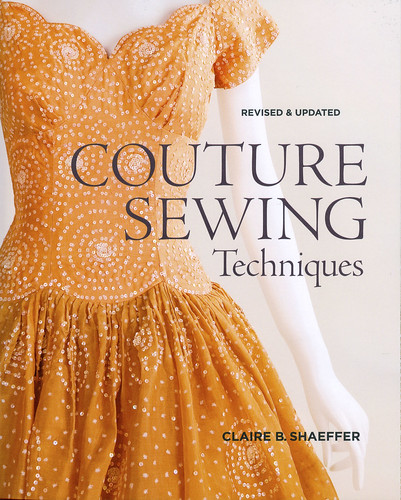
Couture Sewing Techniques

Couture

When I was growing up we had a book in the house that I considered the sewing bible. If ever I was was stumped on a particular application I would pull out the old Vogue Sewing Book and it would have clear, well-illustrated instructions on how to insert an invisible zipper or chain-weighted hems. While informative, it was not terribly inspiring.

Back in 1995, New York's Metropolitan Museum of Art staged a stunning exhibition on Haute Couture. The beautiful catalog of that exhibit joined the Vogue Sewing Book as one of my go-to books, this one providing the source of inspiration which the other was lacking.

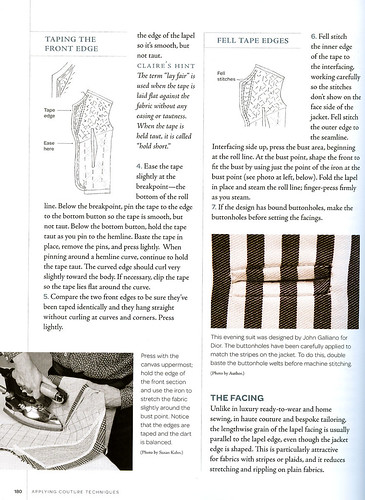
I don't do much sewing other than tailoring these days, but when I do, I have been using a new reference, Claire Shaeffer's Couture Sewing Techniques. Not only does her book provide the type of technical detail that I found in the old Vogue Book, but stunning examples of real-life couture garments and the application of those techniques, as well as a chapter on the history of haute couture, including the maniacal attention to detail, like matching the stripes on bound buttonholes, for example.

Couture2

Claire recently sent me a copy of her newly revised and updated Couture Sewing Techniques, which includes a new chapter on designing with special fabrics, and tons of fantastic and inspiring photos taken from her countless visits to ateliers, museums, and from her own extensive collection of couture garments. If you don't already have a copy, I can highly recommend it, and even if you do, you may want to consider the upgrade. As I flip through the pages I am already planning my niece's wardrobe. Is four years old too young to be wearing couture?

Mmm, no.

StumbleUpon.com

Wednesday, August 31, 2011

Men of the Cloth

This has been some time in the making but it's in the final push to finish it. The film maker has made an appeal for donations to help her finish. If you liked the trailer and want to see the rest of it completed, you can go here to make a donation. I did.

MEN OF THE CLOTH IndieGoGo Video from Vicki Vasilopoulos on Vimeo.


StumbleUpon.com

Tuesday, August 23, 2011

Quarters

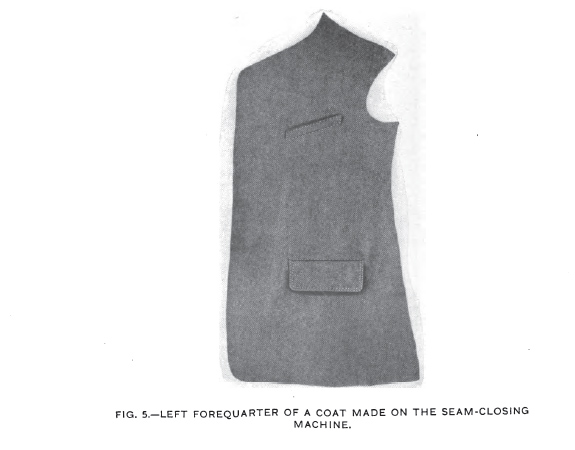
The internet has a way of expanding the English language and ever since discovering the tailored clothing forums I have also encountered a term that I had never heard used outside of the internet, and that was "quarters". As in, a way of describing the shape of the front of the coat. Whereas in tailoring circles, or the ones I have always frequented, anyway, have generally referred to a "straight front" or a "cutaway front", the internet usage has people referring to "open quarters" and "closed quarters". Which sounds more like an architectural term to me, but whatever. I never understood where the term might have originated, suspecting one of the forum stars may have coined it and it become an iTailor meme.
Well, I think I know where it comes from now.

forequarter

An illustration from the book I referenced in my last post, showing the "forequarter" of the coat, something more commonly called the forepart, particularly since coats have generally been cut in six pieces since the 1930s, not four. So while it is not completely without precedent to refer to the "quarters" of a coat, it's something you might more readily find at "ye olde taylor shoppe". But then, the iGentry seem to fond of anachronisms, and so it is perhaps appropriate.

StumbleUpon.com

Friday, August 19, 2011

Men's Factory-Made Clothing

A few book reviews to do.

Basted

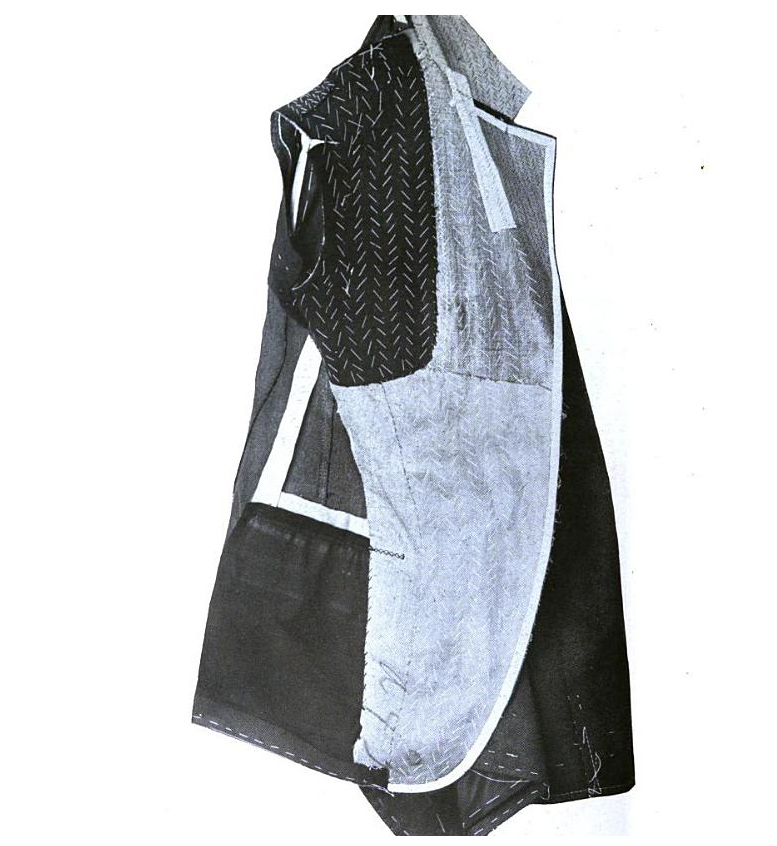
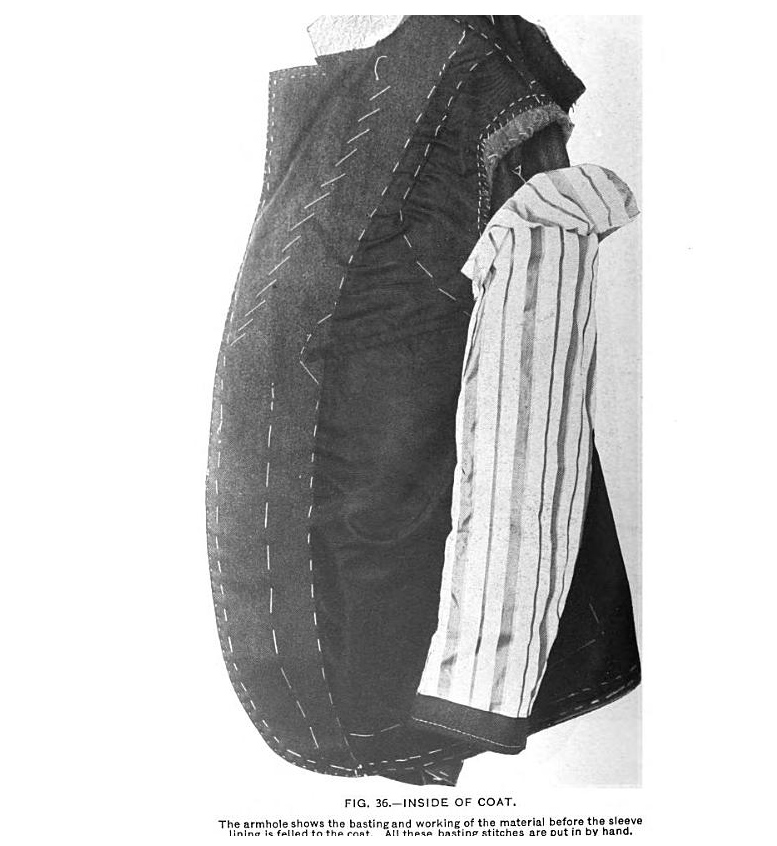
The first will appeal only to the super-geeks like myself. Published in 1916, The Men's Factory-Made Clothing Industry is a report on the cost of producing men's clothing produced by the U.S. Department of Commerce, and can be found on Google Books.


Buried within a lot of dry financial statistics is an interesting history of ready-to-wear clothing in the U.S., as well as some very interesting descriptions of the manufacturing process, some of the machines already in use at that time, and some startling passages such as the following:

"The imports of clothing into the United States are almost negligible and are generally English overcoats, novelty garments like the Balmacaan, and golfing and motoring clothes. No sack suits are imported.

...

English ready-made clothing is not comparable with the American. The English hand tailoring is poor, except in the finest custom work. Very conservative styles of men's clothing are worn in England; the models do not change from one season to another as they do in this country. High-salaried designers [ahem] are employed by the larger clothing factories in the United States, who are constantly introducing attractive styles.

...

American people believe not only that the styles of clothing for men that are originated in the United States are superior to those that come from other countries, but also that the workmanship of the domestic product is superior to the workmanship on ready-made clothing produced in foreign countries. This belief accounts, in a measure, for the tremendous increase in the production of factory-made clothing in the United States during the last 20 years.

While the manufacture of ready-made clothing is one of the large industries in the United States, this industry is of comparatively small importance in other countries. The completeness of the factory equipment, the thoroughness of the factory organization, and the efficiency of the working force, which are noticeable in many establishments for making men's clothing in this country, are not even approached in other countries. Nearly all the ready-made clothing manufactured in Europe is of low-grade, cheap varieties, and is almost invariably manufactured in small factories, in shops, or in the homes of the workers."

Insides

I knew that the method of manufacturing by breaking down the process into minute operations had originated in the U.S. and had been exported to Europe, but was a bit startled by the assertions about the level of quality, mainly because the reverse is often true today. In retrospect, however, it makes perfect sense. But taking it into a larger context, we can trace the progression of the source of quality goods from the U.S., then to Italy who has held the crown since Brioni started to push the "Made in Italy" brand back in the fifties, and now it's moving to China. Many people still associate Chinese-made product with inferior quality, just as Japanese electronics were once considered junk, but those of us who have actually visited facilities in China know that they are not far off from the potential of eclipsing Italy in terms of production of quality garments.

I hope I'm still around in 50 years so I can witness for myself how the manufacturing landscape will have evolved.

StumbleUpon.com

Thursday, August 11, 2011

America's Mad As Hell Moment

mad as hell 2

Nothing to do with clothing for once.

MSNBC’s Dylan Ratigan recently went on an emotional rant worthy of Keith Olberman and the avalanche of response prompted a follow-up in which he expresses the collective rage of the American people toward Washington and the economy. He encourages the people to take to Twitter and Facebook and the blogosphere to express the fact that we are Mad as Hell and that we demand change.

While I agree with the idea that social networking-driven grassroots movements are a new and interesting force in politics and society, I am, personally, a little tired of all the anger and instead offer a bit of constructive musing.

I am currently contemplating the purchase of a home (and am lucky enough to be able to get the credit to do it) but the state of the economy gives me pause; while I am hesitating I realize that it is this very lack of confidence that is one of the greatest threats to the current state of affairs. I am no economist so I may be way off base on this, but it seems to me that in a consumer-driven economy (I believe that the U.S. is 70% consumer-driven), if people aren’t spending money then business aren’t selling things and thus do not need to employ people in order to create and sell these things. My hesitation is perpetuating our economic problems. Of course, I think it is a very good thing that people are scaling back on extravagant spending and living within their means rather than within the means of their Mastercards, but I also think that it is very obvious that we can’t wait around for the turkeys in Washington to fix this mess- they won’t- and that we the people can do something simply by having a bit of nerve, and instead of hiding all of our cash under the mattress, that we responsibly spread some of it around (leave the credit card at home, please). That is, after what drives the economy and the jobs machine and maybe we can fix the economy ourselves, or at least give it a hearty push.

So it may be a stretch to suggest that buying a home despite worries about the stock market, or even just a buying pair of shoes can be seen as an act of patriotism, but in my perhaps twisted world view, that is exactly what it is at this moment in time.

So excuse me while I call my realtor, and then we can get back to the subject of clothing.

EDIT- The very day I wrote this post I got an email from my realtor- the place I am interested in has been on the market forever but that very day they got an offer on it and if I am interested I need to move NOW. So I am looking at a potential bidding war. The irony.

StumbleUpon.com

Wednesday, June 22, 2011

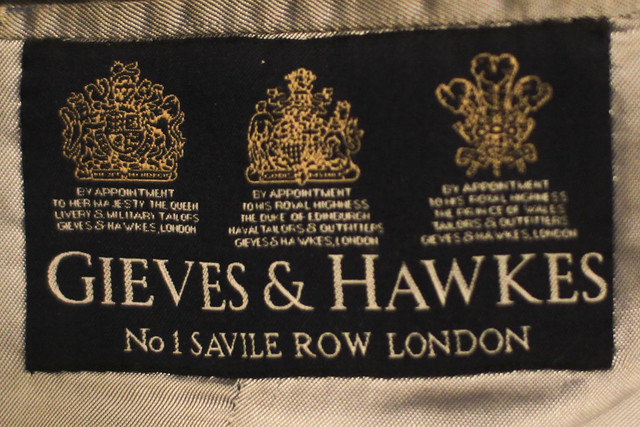
Gieves & Hawkes

GH2

A storm blew through town last night which took down some pretty big trees, and with them, the power. Mine finally came back on this morning but the office is still closed so I glanced over at "the pile"; various garments that have been collecting over the last few months waiting to be chopped up, photographed, and analyzed- maybe today I can dig in a bit and get some blogging done. I've been pretty busy so I'm a bit behind in it, but I realize that I think I'm also running out of interesting things to say; it's getting to the point where there's not so much that's new and interesting to show you- we've seen it all before. (Right at that point I got a message notification about a comment from a reader which read "NEW POSTS PLEASE!!!" Talk about timing)

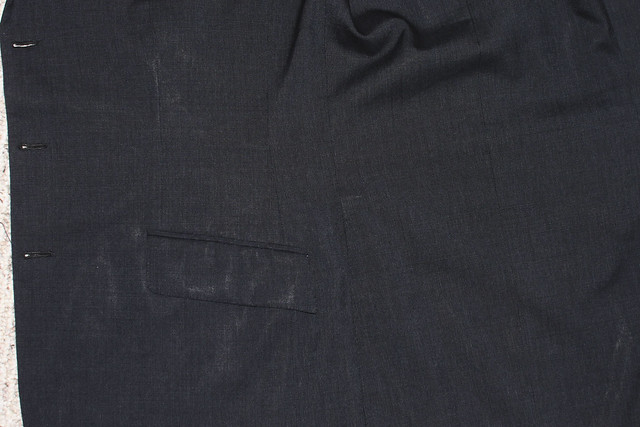
Well, one things we haven't seen, and which people have asked for several times, is an image of one of the dissection victims on a form or a body, to get an idea of the cut or silhouette. Until now the dimensions of most of the garments were such that I wouldn't have been able to, even if I wanted, and I have to caution that it's not a good idea to put a garment which was cut for one specific body onto another because you don't get an accurate picture, but this one was cut for someone very close to my build, though quite a bit taller than I, judging by the sleeve length. So, for a change, we can have a look at the cut of a garment.
GH1

It's a proper 3-button garment with a decent amount of waist and a bit of flare to the skirt. The chest feels fairly firm, but this is not surprising as G&H have a history of military tailoring.

GH6

I had heard that G&H use blindstitch machines to pad their lapels so I expected to see that; instead, they were done by hand. There is a liberal sprinkling of fusible in various parts of the garments, but nothing we haven't seen already on other garments from Savile Row so I won't go over them again.

GH7

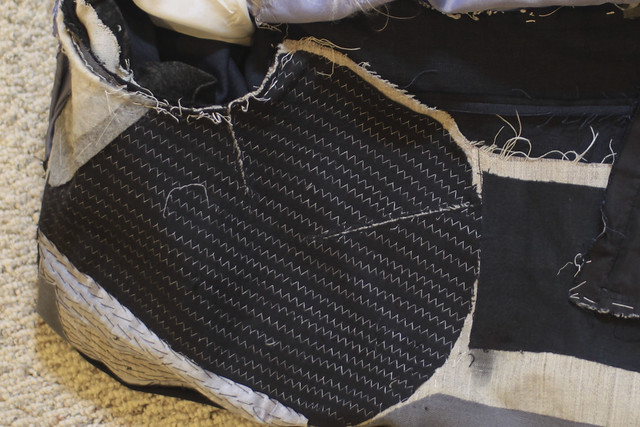
What was a bit surprising was that the chest was padded by zig-zag machine, in a similar fashion to the Saint Andrews garment I cut up, but with a smaller, tighter stitch, which is what gives the firmness to the chest. It would take too long to unpick the whole thing to show you what's inside, but I did just enough to know that the entire chest (the size of the felt) is one big piece of haircloth, with another smaller one in the shoulder. Again, no surprises there.

GH4

Another thing I found interesting was that the seam joining the side body to the front is shoved way back, making a very narrow side body. This probably makes the shaping of the waist easier- I will have to try it out. I don't know if you can make the seams out in the photo, but FWIW,

GH5

As for the rest, it's all stuff that we would expect to see, and have seen, on other Savile Row garments (newer readers are invited to peruse the archives), so I will blame my writer's block on the clothing.

I'm sure that's a first.

StumbleUpon.com